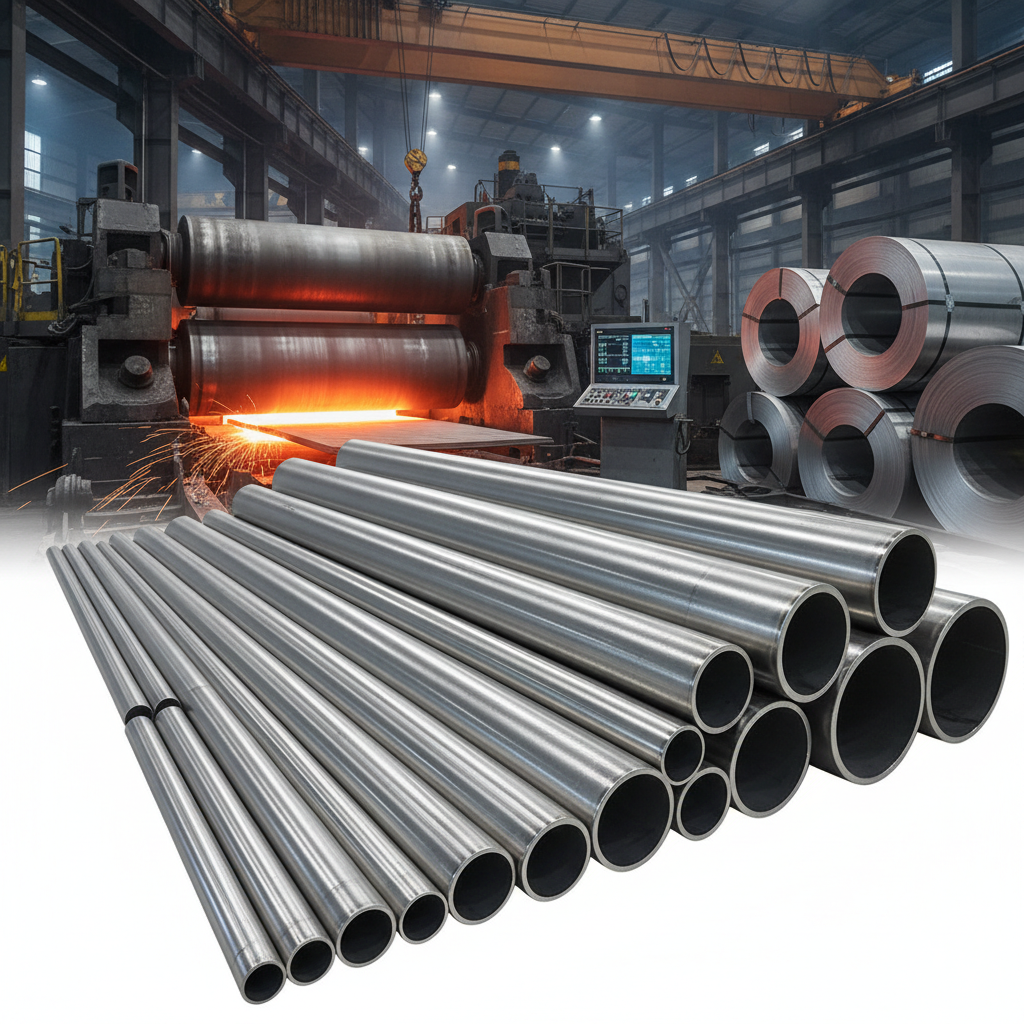

Titanium components are essential for modern industrial piping where extreme corrosion resistance and high strength-to-weight ratios are non-negotiable. When sourcing CHINA titanium pipe fittings, engineers must prioritize the intersection of metallurgical purity and precision machining to ensure long-term structural integrity in aggressive chemical environments.
From offshore oil platforms to specialized chemical refineries, the failure of a single fitting can lead to catastrophic system downtime. The challenge lies in selecting materials that can withstand chloride-induced stress corrosion cracking and high-temperature oxidation. Understanding the nuances of titanium alloys and the manufacturing processes used in the Asian market is critical for procurement officers aiming to balance cost with rigorous safety standards.
This technical guide provides a comprehensive analysis of material selection, quality evaluation, and procurement strategies. Readers will learn how to differentiate between titanium grades, assess the reliability of suppliers based on inventory capabilities, and implement a quality control framework that aligns with international standards such as ASTM and JIS.
Engineering Standards for Titanium Piping Systems
The implementation of titanium in piping systems is driven by the need for materials that outperform traditional stainless steels in highly acidic or saline conditions. Unlike standard alloys, titanium forms a stable, protective oxide film that regenerates almost instantaneously upon exposure to oxygen, providing an exceptional barrier against pitting and crevice corrosion. This property makes CHINA titanium pipe fittings a preferred choice for seawater cooling systems and desalination plants where chloride levels would rapidly degrade other metals. Engineering these systems requires a deep understanding of thermal expansion coefficients and the specific welding techniques needed to prevent atmospheric contamination during installation. Proper fabrication involves inert gas shielding to ensure that the weld zone maintains the same corrosion resistance as the base metal, preventing localized failures at the joints.
Procurement and Selection Guide for Industrial Fittings
Selecting the right titanium components involves a multi-dimensional evaluation of chemical composition, mechanical properties, and the supplier's ability to maintain consistent quality across large batches. The following analysis breaks down the critical technical and commercial factors that influence the lifecycle value of the installation.
Material Grade Comparison
Not all titanium is created equal. Grade 2 (commercially pure) is widely used for general corrosion resistance, whereas Grade 5 (Ti-6Al-4V) is selected for applications requiring superior mechanical strength. Procurement teams must verify that the grade matches the specific operational stress and chemical exposure of the project to avoid over-specifying or risking premature failure.
| Titanium Grade | Key Property | Primary Application | Evaluation Criterion |
|---|---|---|---|
| Grade 2 (CP) | High Ductility | Chemical Processing | Corrosion Rate |
| Grade 5 (Ti-6Al-4V) | High Strength | Aerospace/Medical | Yield Strength |
| Grade 7 (Pd-Alloy) | Extreme Acid Resistance | Chlorine Plants | Crevice Stability |
| Grade 11 (EM) | Enhanced Purity | Semiconductor | Surface Finish |
| Grade 12 | Pitting Resistance | Marine Heat Exchangers | Chloride Tolerance |
| Custom Alloys | Tailored Performance | Nuclear/Offshore | ASTM Compliance |
Corrosion Resistance Factors
The primary driver for choosing titanium is its immunity to most chlorides. In environments like offshore drilling or chemical transport, the stability of the passive layer is the most critical factor. Evaluators should check for the presence of palladium or ruthenium in specific grades (like Grade 7) which further enhances resistance in reducing acids, ensuring the system does not suffer from unexpected thinning or perforation.
Dimensional Precision and Tolerances
Precision engineering is vital for leak-proof assemblies. High-performance fittings must adhere to strict dimensional tolerances to ensure a seamless fit with piping. BENKOO METAL leverages advanced machining capabilities to provide precision-engineered solutions, ensuring that components integrate perfectly into automated production lines without requiring extensive on-site modification.
High-Pressure Operational Stability
Under high-pressure conditions, the mechanical reliability of the fitting is paramount. This involves testing for tensile strength and torsion resistance. For critical industries like Oil & Gas, the ability of the material to withstand cyclic loading without fatigue is a primary safety requirement, necessitating rigorous batch testing and spectral analysis before shipment.
Industry-Specific Application Scenarios
Application varies significantly by sector. In medical device manufacturing, the focus is on biocompatibility and surface smoothness. In petrochemicals, the focus shifts to high-temperature stability and acid resistance. Understanding these diverging needs allows for the selection of the exact alloy and surface finish—whether bright, matte, or coated—to optimize performance.
Quality Certification Requirements
Reliability is guaranteed through adherence to global standards such as ASTM, JIS, and DIN. Buyers should demand Material Test Reports (MTRs) that provide full traceability of the melt and the heat treatment process. Certified quality ensures that the material's chemical composition is exactly as specified, preventing the risk of alloy contamination.
Supply Chain Lead Time Optimization
In large-scale projects, lead time can be a significant bottleneck. Suppliers like BENKOO METAL maintain a strategic inventory—such as their 2,800-ton stock of high-performance materials—to enable rapid delivery. This eliminates the need for high minimum order quantities (MOQ) and reduces production downtime for the end-user.
FAQ
What is the main advantage of titanium fittings over stainless steel?
The primary advantage is superior corrosion resistance, particularly in chloride-rich environments like seawater or chemical processing. Titanium forms a more stable oxide layer than stainless steel, preventing pitting and stress corrosion cracking, while offering a higher strength-to-weight ratio, which reduces the overall structural load of the piping system.
Which titanium grade is most suitable for seawater applications?
Grade 2 (commercially pure) is typically sufficient for most seawater applications due to its excellent corrosion resistance. However, for high-temperature brine or extremely aggressive conditions, Grade 12 is often recommended as it contains a small amount of molybdenum and nickel to further enhance pitting resistance.
How can I verify the quality of titanium components from a supplier?
Buyers should request comprehensive Material Test Reports (MTRs) and certificates of compliance with international standards such as ASTM B338 or ASME. Additionally, verifying that the supplier performs spectral analysis and tensile testing on every batch ensures that the chemical composition and mechanical properties meet the project specifications.
Can titanium fittings be customized for non-standard dimensions?
Yes, professional suppliers provide flexible customization for non-standard diameters and bespoke specifications. This is often necessary for specialized industrial equipment or retrofit projects where standard sizes do not fit. It is important to ensure the supplier has the precision machining capability to maintain tight tolerances during customization.
What are the common risks during the installation of titanium piping?
The most significant risk is contamination during welding. If the weld area is exposed to oxygen or nitrogen at high temperatures, the material can become brittle and lose its corrosion resistance. Using professional-grade inert gas shielding (Argon) and qualified technicians is essential to maintain the integrity of the joints.
How does inventory availability affect B2B procurement cycles?
Large inventories, such as those maintained by BENKOO METAL, significantly reduce lead times by allowing "real-time" material solutions. This allows project managers to avoid long manufacturing wait times, reduces the need for massive upfront stockpiling, and enables faster response to emergency repairs or design changes.
References and further reading
- ASTM International - Standard Specification for Seamless and Welded Titanium Pipe.
- ASME B16.11 - Forged Fittings, Socket-Welding and Threaded.
- ASM International - Titanium Alloys Handbook.
Related Articles