High Performance Seamless CHINA titanium tube suppliers Solutions
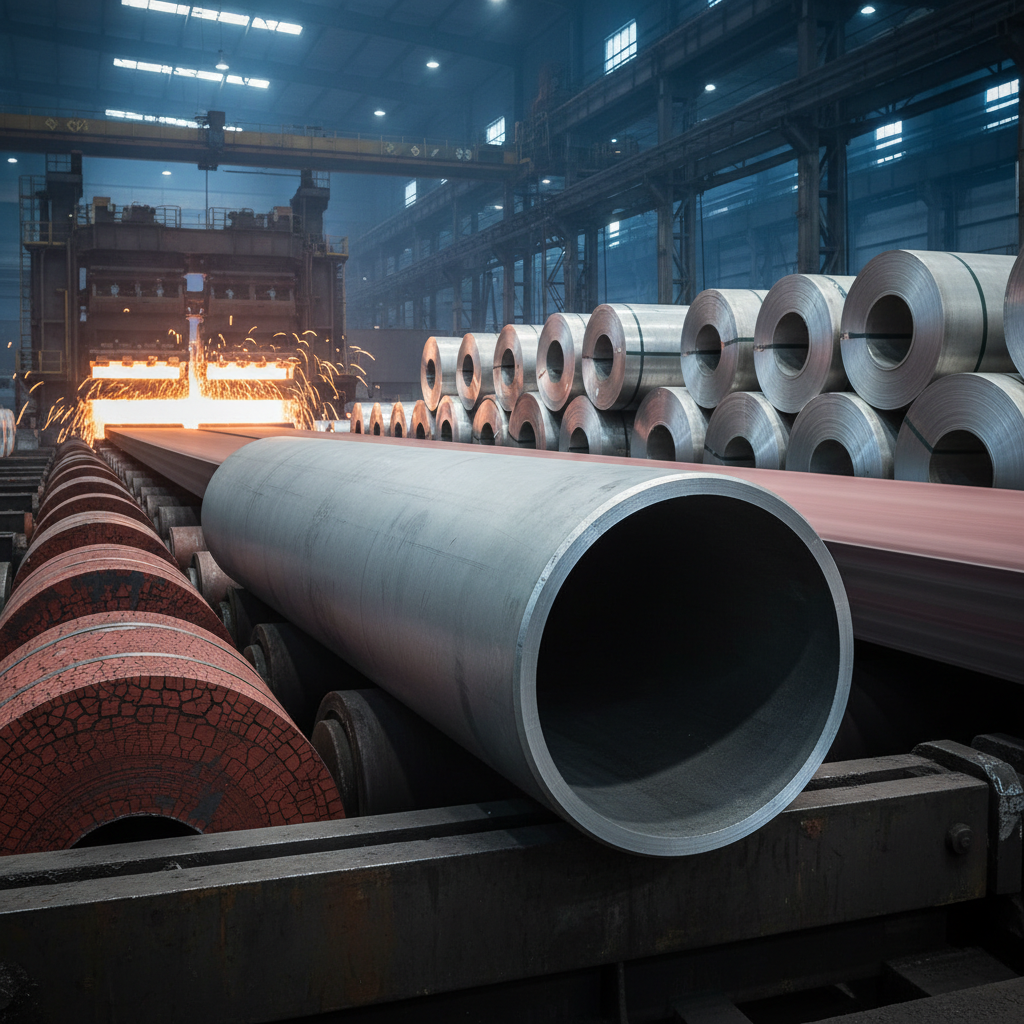
Procuring high-performance tubing for thermal and pressure equipment requires a precise balance of material integrity and adherence to international standards. For engineers and procurement managers in the oil, gas, and petrochemical sectors, selecting the right partner among CHINA titanium tube suppliers is not merely about sourcing a component, but about ensuring system reliability under extreme conditions. Whether the application involves heat transfer in industrial boilers or containing pressurized fluids in chemical reactors, the seamless construction of the tubing is critical to prevent longitudinal weld failures and maintain structural uniformity.
BENKOO METAL specializes in providing seamless tubing solutions that bridge the gap between rigorous technical specifications and real-time project availability. By maintaining a strategic inventory of nickel alloys and stainless steels, we address the common industry challenge of long lead times and minimum order quantity restrictions, enabling critical infrastructure projects to proceed without unnecessary delays.

The Critical Role of Seamless Tubing in Thermal and Pressure Systems
In the context of steel rolling and metallurgy, the distinction between welded and seamless CHINA titanium tube suppliers often comes down to the operational environment. Seamless tubes are manufactured through a process that eliminates the seam entirely, resulting in a more uniform grain structure and superior pressure-bearing capabilities. This is an absolute requirement for boiler tubes, where the material must withstand constant thermal cycling and high-pressure steam without the risk of leakages at a weld point.
These components are categorized by their primary function within a plant. Boiler tubes are designed to facilitate efficient heat transfer from combustion gases to water or steam, often serving as superheaters or economizers. In contrast, heat exchanger tubes focus on the thermal exchange between two separated fluids, requiring high corrosion resistance to handle aggressive chemical media. Pressure vessel tubes act as the skeletal framework for reactors and separators, where the integrity of the tube wall directly impacts the safety of the entire facility.
- Material Uniformity: Seamless construction ensures no weak points along the length of the tube.
- Pressure Tolerance: Enhanced ability to handle internal pressures without deformation.
- Thermal Efficiency: Optimized wall thicknesses to maximize heat transfer while maintaining strength.

Technical Specifications and Material Grade Selection
Selecting the appropriate material grade is a technical decision driven by the specific corrosive agents and temperature ranges of the application. BENKOO METAL provides tubes that conform to major international standards such as ASTM and ASME, ensuring global compatibility and safety compliance. For high-temperature boiler applications, alloy steels like T11, T22, and T91 are utilized for their exceptional creep strength, preventing the tubes from sagging or rupturing over years of continuous service.
When corrosion is the primary threat—such as in marine environments or chemical refineries—stainless steel grades like TP304/304L and TP316/316L are the industry standard. These materials form a passive oxide layer that protects the base metal from oxidation and pitting. For even more aggressive environments, nickel alloys are deployed. The precision in dimensional control, including tight tolerances on outer diameter (OD) and wall thickness (WT), is vital for ensuring a perfect fit within tube sheets, which prevents vibration-induced wear and leakage.
Every shipment is accompanied by a Mill Test Certificate (MTC), providing full traceability. This documentation is essential for meeting PED (Pressure Equipment Directive) and ASME code compliance, allowing project engineers to verify the chemical composition and mechanical properties of the steel before installation.
Industry Applications and Operational Scenarios
The application of high-grade seamless tubing spans across several critical energy and industrial sectors. In power stations, these tubes form the water wall panels and superheaters, where they are subjected to intense radiant heat. Any failure in these sections can lead to catastrophic plant shutdowns. Therefore, the use of materials with high creep-rupture strength is non-negotiable.
In the Oil & Gas transportation and refinery sector, heat exchanger tubes are the workhorses of the process. They manage the cooling of hydrocarbons and the heating of catalysts. In these scenarios, the tubes must resist stress corrosion cracking (SCC) and sulfuric acid attack. BENKOO METAL supports industry leaders like ADNOC, SABIC, and BP by providing materials that are processed through specific heat treatments to optimize their internal stress profiles.
Furthermore, in nuclear and wind power sectors, the demand for precision-engineered tubes is increasing. Whether it is for cooling systems in nuclear reactors or hydraulic components in wind turbine nacelles, the focus remains on dimensional accuracy and material purity. By offering a range of sizes from 6.35 mm to over 200 mm, we cater to both the micro-bore requirements of instrumentation and the large-bore needs of main process vessels.
Technical Material and Application Matrix
| Tube Category | Standard Compliance | Common Material Grades | Typical Application |
|---|---|---|---|
| Boiler Tubes | ASTM A213, ASME SA213 | T11, T22, T91, TP321 | Superheaters, Economizers |
| Heat Exchanger | ASTM A213, A269 | TP304L, TP316L, TP347H | Shell & Tube Exchangers |
| Pressure Vessel | ASTM A335, SA335 | SA106 B/C, T5, T11 | Reactors, Separators |
| Specialty Alloy | ASME BPE / Custom | Nickel Alloys, Duplex | Offshore, Nuclear Power |
| Industrial Tubing | ASTM A178/A179 | Carbon Steel SA178C | HVAC, Low-Pressure Steam |
Evaluating Global Tube Sourcing and Quality Assurance
For procurement professionals, the challenge of dealing with various international vendors often lies in the consistency of quality and the reliability of the supply chain. When evaluating suppliers, the focus should shift from mere pricing to total cost of ownership, which includes the cost of potential failures and the impact of lead-time delays. A supplier that maintains a physical inventory—such as BENKOO METAL's 2,800-ton stock—provides a significant risk mitigation advantage by enabling real-time material solutions.
Quality assurance in seamless tubing involves more than just a visual check. It requires non-destructive testing (NDT), including ultrasonic and eddy current testing, to ensure the absence of internal flaws. Dimensional ovality must be strictly controlled to ensure that the tube maintains its structural integrity when expanded into a tube sheet. Buyers should prioritize suppliers who can provide comprehensive traceability from the raw ingot to the final finished tube.
Moreover, the ability to handle orders with no minimum order quantity (MOQ) is a critical factor for maintenance, repair, and overhaul (MRO) activities. In an emergency shutdown scenario, the ability to source a small quantity of a specific alloy grade quickly can save a company millions in lost production time.
Future Trends in High-Pressure Tubing and Material Science
The industry is currently moving toward materials that offer higher strength-to-weight ratios and better resistance to hydrogen embrittlement, especially with the rise of the hydrogen economy. As plants move toward higher operating pressures and temperatures to increase efficiency, the demand for advanced alloy steels and nickel-based superalloys is expected to grow. This shift requires suppliers to not only provide the material but also offer technical guidance on material compatibility.
Digitalization in the supply chain is also transforming how these materials are sourced. Real-time inventory tracking and integrated logistics allow for a more agile response to project changes. The integration of machining services with material supply—providing pre-cut, beveled, or threaded tubes—further reduces on-site labor and installation errors.
Ultimately, the goal for any industrial operation is the extension of the equipment's service life. By selecting tubes with optimized creep strength and superior corrosion resistance, operators can extend the intervals between turnarounds, significantly improving the overall profitability and safety of the industrial asset.
Frequently Asked Questions on Industrial Seamless Tubing
What is the main difference between seamless and welded tubes for heat exchangers?
Seamless tubes are manufactured without a weld seam, offering superior pressure resistance and a more uniform structure. Welded tubes have a longitudinal seam which can be a potential point of failure under high pressure or corrosive environments. For critical thermal equipment, seamless is generally preferred for safety and longevity.
How do I choose between TP304 and TP316 stainless steel for my tubing?
TP304 is suitable for general corrosion resistance and food-grade applications. TP316 contains molybdenum, which provides significantly better resistance to chlorides and pitting, making it the preferred choice for marine environments or chemical processing plants.
What are Mill Test Certificates (MTC) and why are they important?
An MTC is a document provided by the manufacturer that certifies the chemical composition and mechanical properties (like tensile strength and yield point) of the material. It ensures the product meets the required ASTM or ASME standards and provides essential traceability for safety audits.
Can you provide tubing with no minimum order quantity (MOQ)?
Yes, BENKOO METAL maintains a large strategic inventory of nickel alloys, stainless steel, and alloy steel, which allows us to supply materials for small-scale MRO projects or custom requirements without imposing MOQ limitations.
What is "creep strength" and why does it matter for boiler tubes?
Creep is the tendency of a solid material to move slowly or deform permanently under the influence of persistent mechanical stresses and high temperatures. For boiler tubes, high creep strength is essential to prevent the tube from thinning or rupturing over time during high-temperature operation.
What dimensional tolerances should I expect for seamless tubes?
Tolerances vary by standard (e.g., ASTM A213), but typically focus on the Outer Diameter (OD), Wall Thickness (WT), and Ovality. Precise control is necessary to ensure the tubes fit securely into the tube sheet and can be properly expanded or welded.
Technical References and Industry Standards
- ASTM International - Standards for Material Specifications
- ASME - Boiler and Pressure Vessel Code (BPVC)
- NIST - Material Property Databases
- ISO - International Organization for Standardization
Finding a reliable partner for industrial tubing requires a combination of technical expertise and supply chain agility. Whether you are upgrading an existing heat exchanger or designing a new pressure vessel, ensuring your materials are certified and high-performing is the first step toward operational excellence. For real-time material solutions and technical support, professional consultants can help you navigate the complex landscape of alloy selection and standard compliance.
Related Articles