
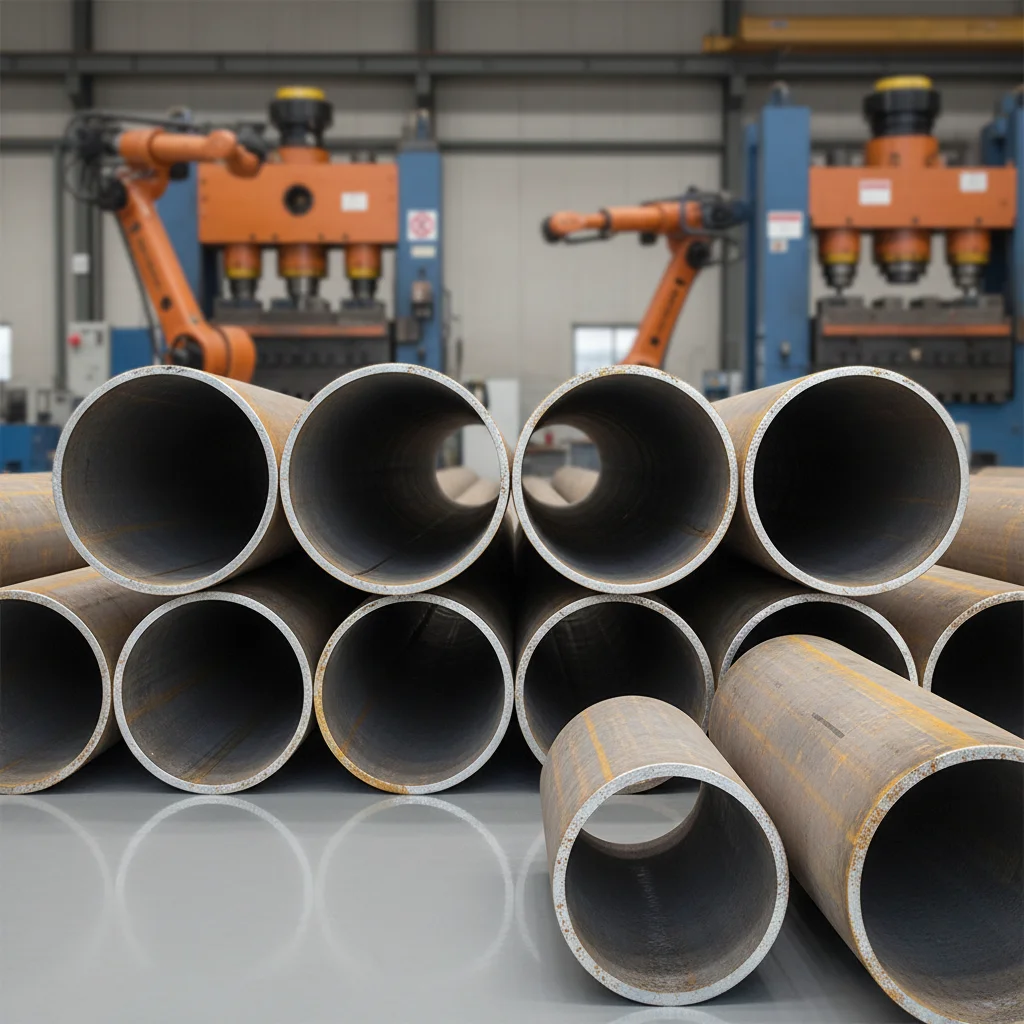
Super duplex 2507 pipe represents a significant advancement in materials science, offering exceptional resistance to corrosion and high strength. This makes it crucial across diverse industries facing harsh environments, from offshore oil and gas to chemical processing. Understanding its properties and applications is vital for engineers, procurement specialists, and anyone involved in designing and maintaining critical infrastructure.
The increasing demands placed on industrial infrastructure – particularly in aggressive chemical or marine settings – necessitate materials capable of long-term reliability. Traditional materials often fall short, leading to costly repairs, downtime, and potential safety hazards. Super duplex 2507 pipe addresses these challenges, providing a robust and durable solution that minimizes lifecycle costs and enhances operational safety.
Globally, the adoption of super duplex 2507 pipe is growing as industries prioritize longevity and performance. Its ability to withstand chloride stress corrosion cracking, pitting, and crevice corrosion makes it an indispensable component in numerous applications. The pipe’s performance translates directly into reduced environmental impact through extended service life and minimized material waste.
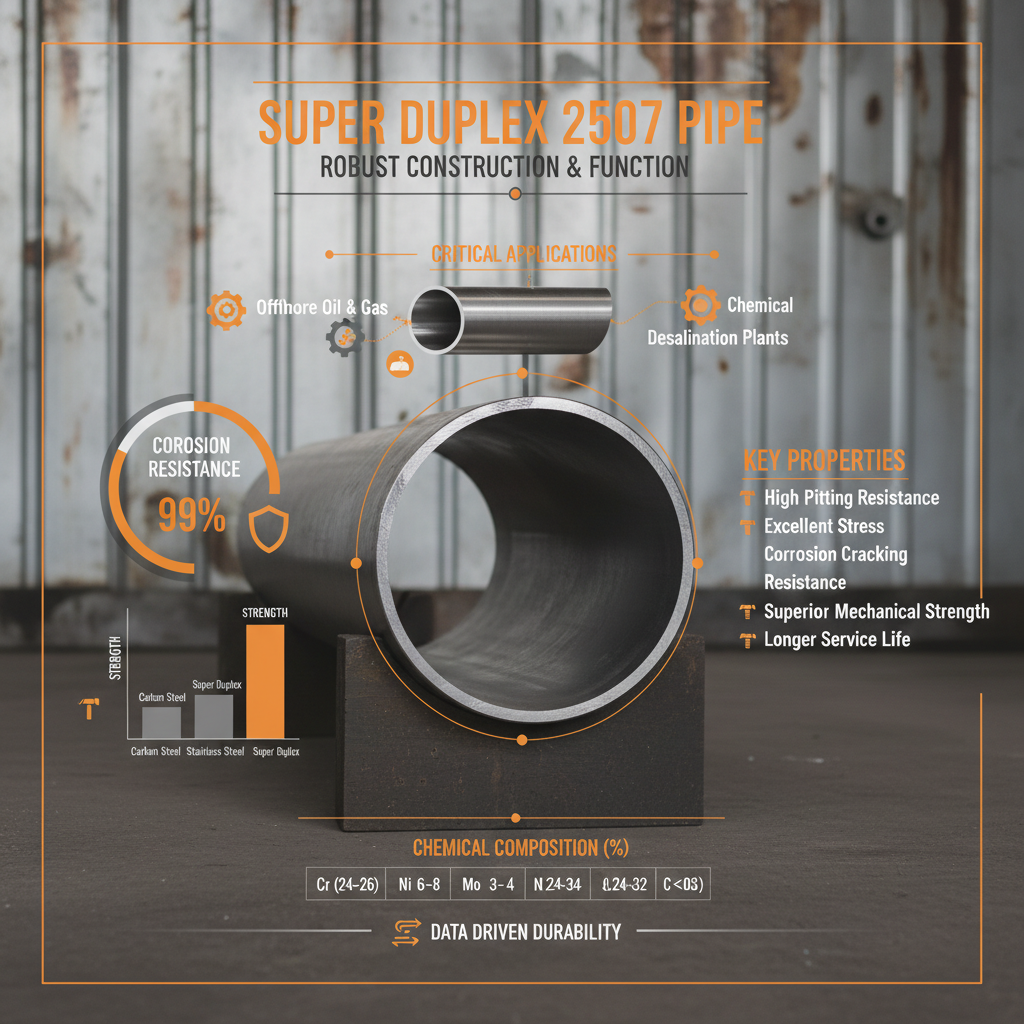
Introduction to Super Duplex 2507 Pipe
Super duplex 2507 pipe is a premium stainless steel alloy, characterized by its exceptional combination of high strength and superior corrosion resistance. It’s specifically engineered to perform in the most demanding environments, outperforming both austenitic and ferritic stainless steels in many applications. The pipe’s unique microstructure delivers a potent blend of toughness, weldability, and resistance to localized corrosion.
The demand for high-performance materials like super duplex 2507 pipe is directly tied to the increasing complexity and harshness of modern industrial processes. Industries like oil and gas, chemical processing, and desalination require materials that can withstand extreme conditions, and super duplex 2507 pipe consistently meets those demands, providing a reliable and cost-effective solution.
FAQS
Super duplex 2507 pipe provides significantly higher resistance to corrosion, particularly chloride stress corrosion cracking, and boasts superior strength compared to standard austenitic stainless steels. This results in extended service life, reduced maintenance costs, and enhanced safety in aggressive environments. Its high PREN (Pitting Resistance Equivalent Number) makes it ideal for marine and chemical applications where pitting and crevice corrosion are prevalent.
Welding super duplex 2507 pipe requires specific procedures to maintain its corrosion resistance and mechanical properties. Low heat input techniques, such as Gas Tungsten Arc Welding (GTAW) and Gas Metal Arc Welding (GMAW) using specific filler metals are recommended. Post-weld heat treatment (PWHT) is often necessary to restore optimal microstructure and prevent intergranular corrosion. Proper shielding gas selection and controlled cooling rates are also critical.
While super duplex 2507 pipe exhibits excellent mechanical properties at ambient temperatures, its strength decreases at elevated temperatures. It's generally not recommended for continuous service above 300°C (572°F). For applications requiring higher temperature resistance, other alloys may be more suitable. However, it can handle short-term temperature excursions within specific limits.
The initial cost of super duplex 2507 pipe is typically higher than that of conventional stainless steels. However, when considering the total lifecycle cost, including maintenance, repairs, and replacement, it often proves to be more cost-effective due to its superior corrosion resistance and extended service life. A thorough lifecycle cost analysis is recommended to evaluate the long-term economic benefits.
Super duplex 2507 pipe is widely utilized in industries facing corrosive environments. These include oil and gas (offshore platforms, pipelines), chemical processing (handling aggressive chemicals), desalination (seawater intake and discharge), power generation (cooling water systems), and wastewater treatment (handling corrosive effluents). Its reliability makes it essential in these demanding applications.
Super duplex 2507 pipe commonly conforms to several international standards, including ASTM A789, ASTM A938, EN 10296, and ISO 9307. These standards specify the chemical composition, mechanical properties, and testing requirements to ensure quality and performance. Adherence to these standards is crucial for ensuring the pipe’s suitability for intended applications.
Conclusion
In conclusion, super duplex 2507 pipe stands as a remarkable material solution, offering a compelling blend of strength, corrosion resistance, and longevity. Its ability to perform reliably in some of the most challenging environments globally makes it a critical component in vital industries, from energy production and chemical processing to water desalination. The benefits extend beyond operational efficiency, contributing to enhanced safety and sustainability.
Looking forward, continued innovation in welding techniques, material science, and digital monitoring will further unlock the potential of super duplex 2507 pipe. Embracing these advancements will solidify its role as a premier material choice for critical infrastructure projects. To learn more about implementing super duplex 2507 pipe in your projects, visit our website: www.benkoometal.com
Related Posts
-
Advancements in Tube Steel Structure for Modern Construction and Sustainable Development
-
Exploring the Advantages and Applications of Duplex Steel Pipe
-
Advancements in Corrugated Steel Culvert Pipe for Modern Infrastructure Solutions
-
Understanding API 5L Pipe for Critical Infrastructure Applications