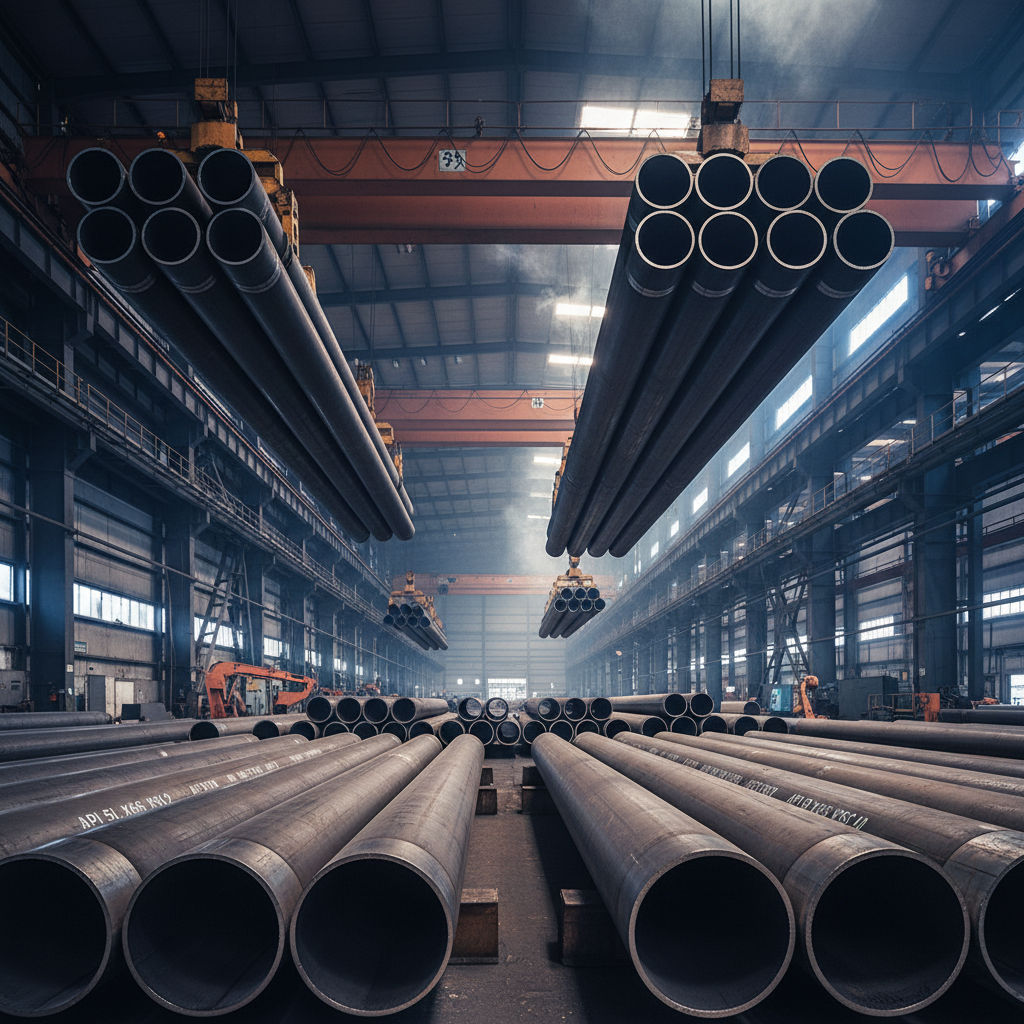
High Performance CHINA structural steel tubing for Industry
Engineering critical infrastructure requires materials that can withstand extreme thermal stress and high-pressure environments without compromise. High-performance seamless tubing is the backbone of these systems, providing the necessary structural integrity for everything from power station superheaters to complex petrochemical reactors. For procurement managers and engineers, the challenge lies in sourcing materials that balance strict international code compliance with operational longevity.
BENKOO METAL addresses these needs by supplying specialized CHINA structural steel tubing engineered for maximum heat transfer efficiency. By eliminating longitudinal welds, our seamless solutions prevent common failure points found in welded alternatives, ensuring that critical pressure vessels and boiler systems remain safe under the most demanding industrial conditions. Whether navigating the complexities of ASME standards or seeking specific alloy grades for creep resistance, selecting the right tubular component is vital for minimizing downtime and optimizing system lifespan.

Technical Architecture of Seamless Heat Exchange and Pressure Components
The fundamental advantage of seamless construction lies in its uniform molecular structure. Unlike welded pipes, seamless tubes are manufactured through a piercing or extrusion process, which removes the heat-affected zone (HAZ) typically associated with longitudinal seams. This results in a superior pressure-bearing capacity, which is non-negotiable for high-temperature environments where thermal expansion and contraction occur repeatedly.
From a materials science perspective, the selection of the grade determines the tube's resistance to oxidation and creep. For instance, alloy steels such as T91 are specifically engineered for high-temperature superheaters due to their exceptional creep strength. Similarly, stainless steel grades like TP347H provide the necessary stability in corrosive chemical environments. The synergy between precise dimensional control—specifically regarding ovality and wall thickness—and material integrity ensures a perfect fit during the tube sheet assembly process in industrial heat exchangers.
Furthermore, compliance with global standards such as ASTM and ASME is not merely a formality but a safety requirement. These certifications guarantee that the material has undergone rigorous testing for tensile strength, hardness, and chemical composition, providing engineers with the reliable data needed for precise stress calculations in pressure vessel design.

Industrial Application Scenarios and Material Matching Logic
Matching the correct tube material to the specific operational environment is the most critical step in preventing premature system failure. In power generation, superheaters and reheaters are subjected to intense heat; here, the use of Alloy T11 or T22 is common to prevent oxidation. In contrast, the refinery and chemical sectors often deal with aggressive media, making TP316L or TP321 stainless steel the preferred choice due to their superior corrosion resistance.
Typical application matrices include:
- Power Plant Boilers: Utilizing SA213 alloy tubes to maximize steam temperature while maintaining structural stability.
- Petrochemical Reactors: Implementing high-nickel alloys or specialized stainless steels to resist chemical attack and high-pressure stress.
- Oil & Gas Transportation: Employing carbon steel SA106 B/C for pressure vessel components where structural strength is the primary requirement.
- Nuclear & Wind Power: Using high-precision tubing that meets the most stringent PED and ASME safety certifications for critical infrastructure.
By analyzing the specific thermal profile and the chemical composition of the transported medium, BENKOO METAL helps clients select components that reduce the frequency of inspections and extend the overall maintenance interval of the plant.
Evaluating Supplier Capabilities for High-Pressure Tubular Procurement
When sourcing CHINA structural steel tubing for critical projects, procurement managers must look beyond the price per ton. The true value of a supplier is found in their ability to provide full traceability and technical support. Mill Test Certificates (MTC) are the primary evidence of quality, ensuring that the raw material's chemistry and mechanical properties align with the project's engineering blueprints.
A strategic partner should offer more than just distribution; they should provide an integrated business model. This includes maintaining a strategic inventory—such as BENKOO METAL's 2,800-ton stock of nickel alloys and stainless steels—to eliminate the constraints of minimum order quantities (MOQ) and ensure rapid deployment for urgent repairs or project expansions. Additionally, the ability to provide custom fabrication, such as precise cutting and polishing, reduces the workload on the end-user's assembly team.
Reliability in the supply chain is further reinforced by global logistics expertise. Ensuring that heavy industrial tubes are shipped via optimized channels reduces the risk of transit damage and prevents costly project delays. For major industry leaders like ADNOC, SABIC, and Halliburton, this level of professional integrity and on-time performance is the baseline for enduring partnerships.
Comparative Performance: Seamless vs. Welded Industrial Tubes
| Performance Metric | Standard Welded Tubes | BENKOO Seamless Tubes | Critical Impact |
|---|---|---|---|
| Pressure Rating | Moderate / Limited | High / Superior | Safety Margin |
| Corrosion Resistance | Variable (at seams) | Uniformly High | Leak Prevention |
| Service Life | Standard | Extended (Creep Resistant) | Capex Efficiency |
| Maintenance Cost | Frequent Inspection | Reduced Interval | Opex Reduction |
| Safety Compliance | Basic Industry Std | ASME/PED Certified | Regulatory Approval |
Quality Assurance Protocols and Traceability Standards
Quality assurance in high-pressure tubing is a multi-stage process that begins long before the material reaches the client. It starts with the strategic sourcing of raw materials from top-tier mills. Every batch is subjected to rigorous verification to ensure that the alloying elements—such as Chromium and Molybdenum—are precisely balanced to meet the requirements of standards like ASTM A213 or A335.
The inspection phase involves advanced dimensional control. Strict tolerances on outer diameter (OD), wall thickness (WT), and ovality are enforced to ensure a perfect fit for industrial tube sheets, which is essential for maintaining a leak-proof seal in heat exchangers. Multi-stage inspection, including final polishing and surface cleaning, ensures that no contaminants remain that could trigger localized corrosion in service.
Full traceability is the cornerstone of trustworthiness. By providing comprehensive Mill Test Certificates (MTC) for every shipment, BENKOO METAL ensures that the end-user can trace the material back to its original heat number. This level of documentation is mandatory for compliance with the Pressure Equipment Directive (PED) and ASME codes, providing the necessary verification for safety audits and insurance requirements.
Future Trends in High-Performance Tubular Engineering
The industrial landscape is shifting toward higher efficiency and lower emissions, which in turn demands materials that can operate at even higher temperatures and pressures. We are seeing an increased demand for advanced alloy grades that offer superior oxidation resistance, allowing power plants to increase steam temperatures and thus improve overall thermodynamic efficiency.
Digital integration is also transforming the procurement process. Real-time inventory tracking allows project managers to synchronize their material arrivals with construction milestones, reducing on-site storage costs and minimizing the risk of material degradation. Furthermore, the trend toward "zero-leak" philosophy in petrochemical plants is driving the adoption of higher-precision seamless components over traditional welded options.
For companies operating in the Middle East, North America, and Europe, the focus is shifting toward total cost of ownership (TCO). While seamless tubing may require a higher initial investment, the reduction in operational downtime and the extension of the equipment's lifecycle provide a significantly higher return on investment. Investing in premium material integrity today is the most effective strategy for ensuring long-term industrial sustainability.
Frequently Asked Questions about Industrial Seamless Tubing
What are the main advantages of seamless boiler tubes over welded ones?
Seamless tubes offer higher pressure-bearing capabilities and uniform structural integrity because they lack a longitudinal weld, which is often the weakest point in high-temperature and high-pressure environments.
Which material grade is best for high-temperature superheater applications?
For superheaters, alloy steels like T11, T22, and especially T91 are recommended due to their exceptional creep strength and oxidation resistance at elevated temperatures.
Do BENKOO METAL tubes comply with ASME and PED standards?
Yes, our tubes are manufactured to meet major international standards including ASTM and ASME (e.g., SA213, SA335), and we provide full traceability and Mill Test Certificates (MTC) for PED compliance.
What is the available size range for pressure vessel tubes?
Our pressure vessel tubes typically range from 10 mm to over 200 mm in outer diameter, with customized sizing available to meet specific engineering requirements.
How does BENKOO METAL ensure the precision of tube dimensions?
We utilize advanced dimensional control processes to guarantee strict tolerances on outer diameter (OD), wall thickness (WT), and ovality, ensuring an optimal fit for tube sheet assembly.
Can you provide stainless steel tubes for corrosive chemical environments?
Absolutely. We offer a variety of stainless steel grades including TP304/304L, TP316/316L, TP321, and TP347H, specifically optimized for corrosion resistance in chemical plants and refineries.
Technical References and Further Reading
- ASME - American Society of Mechanical Engineers
- ASTM International - Material Standards
- Pressure Equipment Directive (PED) Guidelines
- Research on Creep Strength in Alloy Steels
Ready to optimize your thermal systems with premium seamless tubing? Contact BENKOO METAL today for professional material solutions tailored to your project blueprints.
Related Articles