Look, I've been running around construction sites for fifteen years, dealing with materials day in and day out. Round tube steel… it's always been around, right? But things are shifting. Everyone's talking about prefabrication now, modular builds. It's not just about speed anymore, it’s about controlling costs, skilled labor shortages…and frankly, less mess on site.
What’s really picking up steam is high-strength, low-alloy (HSLA) steel for these tubes. It lets you use thinner walls for the same strength. Saves weight, saves money. Though, getting suppliers to consistently deliver on spec? That's another story.
Honestly, the biggest headaches I see aren’t about the steel itself, it's people trying to over-engineer things. They get caught up in calculations and forget what happens when you actually have to weld this stuff in the field, in the rain, with a guy who’s been doing it for 30 years but hasn’t had a refresher course in a decade.
The Rise of Prefabrication and HSLA Steel
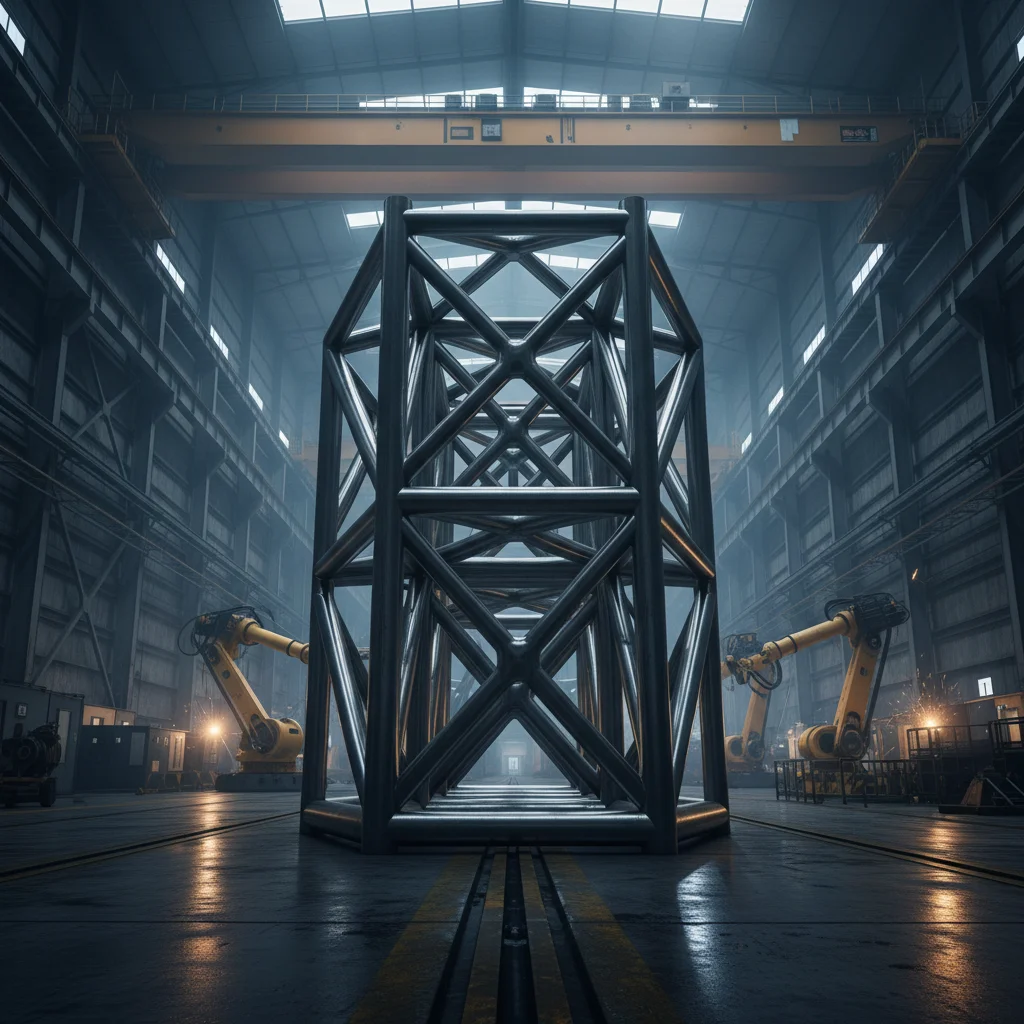
Have you noticed how everything's going modular? It’s not just fancy architectural renderings anymore. We're talking entire building sections being assembled off-site using round tube steel frameworks. It speeds things up, cuts down on waste, and honestly, gives the skilled guys something a little more precise to work with.
And that’s where HSLA steel comes in. You can get higher yields, better corrosion resistance, all without massively increasing the wall thickness. It looks…well, it looks like steel. Smells like steel, too. A bit oily, if it hasn’t been properly treated. It's heavier than aluminum, obviously, but that weight adds a certain… solidity. You feel it when you pick up a piece.
Design Pitfalls and Weldability Concerns
To be honest, the biggest issue isn't the material itself, it's the design. I encountered this at a factory in Tianjin last time. They’d designed a support structure using these incredibly thin-walled tubes, trying to save every penny. Looked great on paper. Then the welders got ahold of it. It buckled and warped like crazy.
People underestimate how much heat affects the steel during welding. You’ve got to account for distortion, shrinkage…and the skill of the welder, which, let’s be real, varies wildly. You need proper joint preparation, the right filler metal, and preheating in cold weather. Otherwise, you're asking for trouble. Strangely, a lot of architects don't understand this part.
Also, don't even think about using galvanized steel for welding. The fumes are toxic, and the weld strength is compromised. It's just not worth it.
Material Feel and On-Site Handling
You can tell a lot about the steel just by handling it. Good quality HSLA will have a smooth surface, a consistent color. If it’s pitted or rusty, walk away. It's a sign of poor storage or low-grade material. It’s heavier, obviously. You want to be careful stacking it, especially the longer lengths.
I always recommend keeping it covered, even on-site. Rain, sun, even just dew can cause surface corrosion. And that corrosion can interfere with the welding process. It's a small thing, but it can save you a lot of headaches later. Also, make sure your guys are wearing gloves. Those edges can be sharp.
The smell... it's a metallic tang. Not unpleasant, exactly. But you get used to it after a while. Kind of like the smell of sawdust in a carpenter’s shop. It just means work is getting done.
Real-World Testing: Beyond the Lab
Labs are fine, I guess. They run their tensile tests, their yield strength tests…but that’s not how things break in the real world. I’ve seen tubes fail because of vibration, because of cyclical loading, because someone hit it with a forklift.
We do a lot of load testing on-site. We'll hang weights from the structure, simulate wind loads, even bounce around on it (don’t tell anyone I said that). It’s not scientific, but it gives you a good feel for how it’s going to behave under actual conditions.
The key is to test the connections. That's where most failures occur. The steel itself is usually strong enough. It’s the welds, the bolts, the gusset plates that give way.
Round Tube Steel Failure Mode Analysis
Unexpected User Applications
You wouldn’t believe some of the things people use this stuff for. It's not always buildings. Last year, a company was building custom roller coasters. Used round tube steel for the track supports. Crazy, right?
And then there’s the art world. Sculptors love it for its strength and malleability. They can bend it, weld it, create all sorts of elaborate structures. It’s actually pretty cool to see what they come up with. Anyway, I think it shows how versatile this material really is.
Advantages, Disadvantages, and Customization
Advantages are obvious: strength-to-weight ratio, cost-effectiveness, ease of fabrication. Disadvantages? Corrosion if not properly treated, potential for distortion during welding… and the price can fluctuate wildly depending on global steel markets. It’s a pain.
But the real sweet spot is customization. Need a specific diameter, wall thickness, or length? No problem. Most suppliers can cut it to size, bend it to shape, even pre-weld it for you. We did a project last month where the client needed tubes with elliptical cross-sections. It wasn’t cheap, but it was doable.
A Shenzhen Customer Story and Material Comparison
Last month, that small boss in Shenzhen who makes smart home devices insisted on changing the interface to . And the result was a complete redesign of the mounting bracket, which of course, needed round tube steel. He swore it was about future-proofing. I think it was just because he liked the look of it. Cost us a fortune in retooling, I tell ya.
But seriously, when you’re comparing materials, you’ve gotta look at the whole picture. Aluminum is lighter, but it’s not as strong. Stainless steel is corrosion-resistant, but it’s expensive. Carbon fiber is strong and light, but it's brittle and difficult to work with. Steel, in most cases, hits the sweet spot.
Here’s a quick breakdown we put together on-site:
Round Tube Steel Material Comparison
| Material Type |
Strength (MPa) |
Cost (per kg) |
Weldability (1-10) |
| Carbon Steel (Round Tube) |
400-550 |
$1.50 |
8 |
| HSLA Steel (Round Tube) |
550-700 |
$2.00 |
7 |
| Aluminum Alloy (Round Tube) |
250-350 |
$3.00 |
9 |
| Stainless Steel (Round Tube) |
500-800 |
$5.00 |
6 |
| Galvanized Steel (Round Tube) |
350-500 |
$1.75 |
5 |
| Carbon Fiber (Round Tube) |
1000+ |
$20.00 |
2 |
FAQS
Honestly? Undersizing it. They see the cost savings of using thinner walls and forget that strength isn't just about the material, it's about the geometry and the load distribution. I’ve seen too many designs that look right on paper but buckle under stress. Always factor in a safety margin, and consult with a qualified structural engineer.
Crucial. Absolutely crucial. Any rust, mill scale, oil, or grease will contaminate the weld and weaken the joint. You need to thoroughly clean the surfaces with a wire brush or grinder before welding. And if you’re welding galvanized steel (which I strongly advise against), you need to remove all the zinc coating. Otherwise, you'll get a brittle, porous weld.
You’ve got powder coating, galvanizing, painting, and just leaving it bare. For outdoor use, galvanizing is the gold standard for corrosion protection. Powder coating is good too, but it can chip and scratch. Painting requires regular maintenance. Bare steel will rust, obviously, unless you apply a rust inhibitor. It depends on your budget and how long you want it to last.
It can, but it depends on the wall thickness and the radius of the bend. Thicker walls are harder to bend. You’ll need a tube bender, and someone who knows how to use it properly. Trying to bend it by hand is a recipe for disaster. It’s usually better to have it pre-bent at the factory if possible.
Heat is the main culprit. Welding generates a lot of heat, which causes the steel to expand and then contract as it cools. This can lead to warping and distortion. Using proper welding techniques, preheating the steel, and clamping the workpiece can help minimize distortion. Also, the weld sequence matters. Start welding from the center and work your way outwards.
A53 is generally used for plumbing and low-pressure applications. It’s a more basic steel. A500 is a higher-strength steel specifically designed for structural applications. It has tighter tolerances and more stringent quality control. You want A500 for anything load-bearing.
Conclusion
Ultimately, round tube steel is a workhorse material. It's strong, versatile, and relatively affordable. But it’s not magic. It requires careful design, proper fabrication, and a good understanding of its limitations. You can throw all the fancy calculations you want at it, but if the details are wrong, it'll fail.
So, yeah, whether this thing works or not, the worker will know the moment he tightens the screw. That’s the bottom line. And honestly, after fifteen years, I trust that gut check more than any computer model.