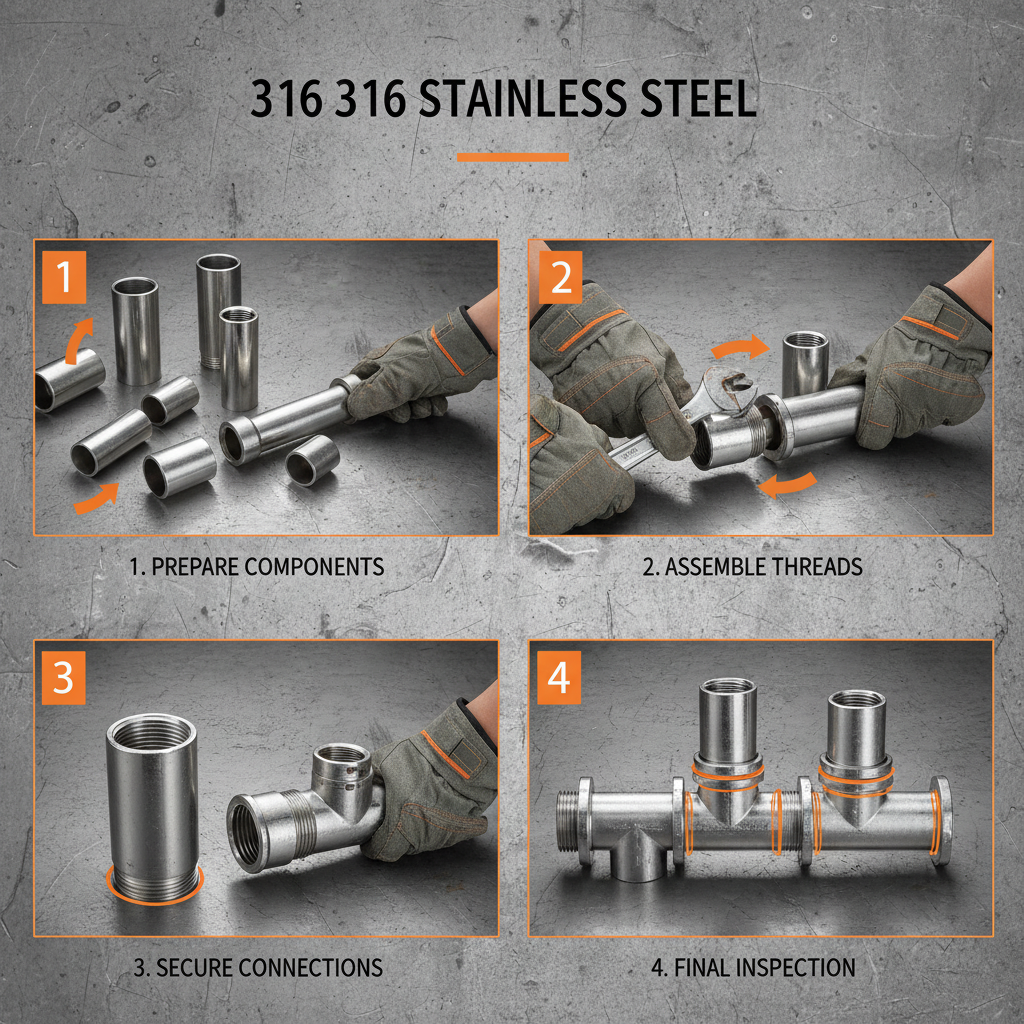

Industrial infrastructure relies heavily on the integrity of its conduit systems, where the selection of a CHINA structural steel pipe determines the long-term stability of energy, chemical, and marine projects. These components must withstand extreme internal pressures and external environmental stressors to prevent catastrophic failures in critical utility networks. This guide examines the technical specifications and procurement logic required to integrate high-performance steel tubing into large-scale engineering frameworks.
For procurement officers and project engineers, the challenge lies in balancing mechanical strength with corrosion resistance, especially in aggressive environments like offshore platforms or chemical refineries. Understanding the distinction between different austenitic grades and welding methods is not merely a technical requirement but a financial imperative to reduce the Total Cost of Ownership (TCO). As industries shift toward more sustainable and durable materials, the focus has moved toward precise material certification and strict adherence to international ASME and EN standards.
Throughout this analysis, we will explore how to evaluate supplier capabilities, the impact of molybdenum additions on pitting resistance, and the critical role of solution annealing in weld integrity. By mapping technical requirements to actual product characteristics, readers will gain a framework for selecting piping solutions that ensure plant uptime and operational safety. We will also detail the specific value propositions provided by experienced distributors in managing complex, no-MOQ inventory for global project sites.
Industrial Piping Fundamentals
The engineering of structural tubing involves a complex interplay between metallurgy and mechanical fabrication. In the context of CHINA structural steel pipe applications, the primary objective is to achieve a balance between wall thickness and weight while maintaining the required burst pressure ratings. For welded variants, the heat-affected zone (HAZ) is the most critical area of concern; improper thermal management during the welding process can lead to sensitization, which significantly increases the risk of intergranular corrosion. Modern manufacturing utilizes Submerged Arc Welding (SAW) for large diameters to ensure a consistent bead and superior penetration, which is essential for high-pressure transmission lines. Furthermore, the application of pickling and passivation (APP) is mandatory to restore the chromium oxide layer, ensuring that the material's inherent corrosion resistance is not compromised by the fabrication process.
Strategic Procurement and Technical Evaluation
Selecting the right piping system requires a multi-dimensional evaluation that aligns the material properties with the specific chemical and mechanical demands of the project site. This involves analyzing the fluid medium, the temperature fluctuations, and the regulatory environment of the installation region.
Material Grade Selection
Choosing the correct alloy is the first line of defense against premature failure. While Grade 304 is sufficient for general atmospheric exposure, environments involving seawater or chlorides require Grade 316 or 317 due to the addition of Molybdenum. For high-temperature zones, such as power plant exhaust sections, Titanium-stabilized grades like 321 are utilized to prevent carbide precipitation.
| Material Grade | Key Alloying Element | Primary Risk Mitigation | Ideal Application |
|---|---|---|---|
| 304/304L | Chromium/Nickel | General Oxidation | Fresh water systems |
| 316/316L | 2-3% Molybdenum | Pitting Corrosion | Marine/Coastal cooling |
| 317L | 3-4% Molybdenum | Aggressive Chlorides | Chemical process lines |
| 321 | Titanium | Intergranular Corrosion | High-temp exhaust |
| 347 | Niobium | Sensitization | Nuclear/Wind Power |
| 904L | High Mo + Cu | Sulfuric Acid Attack | Severe chemical service |
Welding Process Reliability
The transition from a flat sheet to a hollow tube introduces structural vulnerabilities at the seam. The use of TIG or Plasma welding for high-purity applications ensures a smooth internal surface, reducing turbulence and biofouling. In larger diameters, SAW provides the mechanical robustness needed for structural support. BENKOO METAL ensures weld integrity through rigorous non-destructive testing (NDT) and solution annealing to eliminate internal stresses induced during the rolling and welding phases.
Corrosion Resistance Factors
Corrosion in industrial piping is rarely uniform. Pitting and crevice corrosion are the most dangerous as they can cause localized wall penetration without significant weight loss. The Pitting Resistance Equivalent Number (PREN) is a critical metric here; higher molybdenum and nitrogen levels increase the PREN. For desalination plants, utilizing pipes with superior internal surface finishes is essential to maximize the lifespan of RO membrane piping and brine reject lines.
Dimensional Standard Compliance
Interchangeability is critical in B2B procurement. Adherence to ASME B36.19M for stainless steel dimensions ensures that pipes from different batches fit perfectly with standard fittings. Whether specifying Schedule 10S for low-pressure utility water or Schedule 80S for high-pressure process streams, strict tolerance control on the outside diameter (OD) and wall thickness is required to avoid welding misalignment and stress concentrations.
Operational Load Requirements
Piping systems must be evaluated for both internal hydraulic pressure and external mechanical loads. In offshore platforms, pipes are subject to high wind loads and vibrational stress from machinery. The selection of wall thickness must account for these factors to prevent buckling. BENKOO METAL provides technical support to assist engineers in calculating the necessary wall thickness to meet ASME B31.3 pressure ratings.
Quality Certification Traceability
In critical industries like Nuclear or Oil & Gas, a pipe without a mill test certificate is unusable. Full traceability via EN 10204 3.1 or 3.2 certifications allows the end-user to trace the material back to the original heat number. This ensures that the chemical composition and mechanical properties (yield strength, tensile strength) are exactly as specified in the project design documents.
Supply Chain Risk Mitigation
Lead time volatility can derail multi-million dollar projects. Partnering with distributors who maintain significant strategic inventories—such as BENKOO METAL's 2,800-ton stock of alloys—minimizes the risk of project delays. The ability to supply materials with no minimum order quantity (MOQ) allows for agile adjustments to project requirements without incurring wasteful over-purchasing of expensive nickel alloys.
FAQ
What is the primary difference between welded and seamless steel pipes in industrial use?
Seamless pipes are generally preferred for extremely high-pressure applications due to the absence of a weld seam. However, welded pipes are more cost-effective, offer better dimensional consistency in large diameters, and are highly reliable for most industrial applications when processed with proper solution annealing and NDT. Welded pipes are often the standard for large-scale utility and cooling water networks.
How do I choose between Grade 316L and 317L for a chemical plant?
The choice depends on the concentration of chlorides and acids. Grade 316L is the standard for marine environments and general chloride resistance. If the process involves more aggressive chemicals, such as sulfuric or phosphoric acid, Grade 317L is recommended because its higher molybdenum content (3-4%) provides superior protection against pitting and crevice corrosion.
What are the most critical certifications to request when procuring industrial piping?
You should request EN 10204 3.1 or 3.2 Mill Test Certificates (MTC). These documents provide the heat number, chemical analysis, and mechanical test results. For critical projects, also request reports for Hydrostatic Testing and Non-Destructive Testing (RT or UT) to ensure there are no internal defects in the weld seams.
Why is solution annealing important for welded stainless steel pipes?
Welding creates a heat-affected zone where chromium carbides can precipitate, leaving the surrounding area depleted of chromium (sensitization). Solution annealing involves heating the pipe to a specific temperature and quenching it rapidly, which redistributes the chromium and restores the material's full corrosion resistance, preventing premature failure at the weld.
Can welded pipes be used in high-pressure LNG cooling circuits?
Yes, provided they are manufactured to standards such as ASTM A358 or A409 and undergo rigorous testing. In LNG circuits, the focus is on cryogenic toughness and weld integrity. Utilizing low-carbon grades (like 316L) helps prevent sensitization during the welding of these critical lines, ensuring safety at extreme temperatures.
What should I look for in a reliable steel material distributor?
Look for a distributor with a proven track record in your specific sector (e.g., Oil & Gas, Nuclear), a strategic inventory to reduce lead times, and the ability to provide full traceability certificates. A supplier that offers technical support for material selection and can handle custom lengths and thicknesses without strict MOQ limits provides significantly more value than a simple trading company.
References and further reading
- ASTM A312/A312M - Standard Specification for Seamless, Welded, and Cold-Worked Austenitic Stainless Steel Pipe.
- ASME B31.3 - Process Piping Code for Chemical and Petrochemical Plants.
- EN 10217-7 - Welded steel tubes for pressure purposes: Stainless steel.
Related Articles