
THE BUYER'S GUIDE / SELECTION
Carbon Steel Pipe Price: How to Check Application Fit and Specifications
Carbon steel pipe price should be assessed alongside application, manufacturing process, dimensions, grade, end finish, coating and inspection requirements. This guide explains the specification checks buyers can apply when reviewing carbon and alloy steel welded pipe options from HANDAN BENKOO METAL CO., LTD., without treating price as a substitute for technical fit.

Application and service conditions: define whether the pipe is intended for general construction, oil and gas transmission, power-plant service, cryogenic service, high-temperature service or structural use before comparing quotations.
Manufacturing process and dimensions: confirm the relevant process—ERW, LSAW or helical SAW—along with outside diameter, wall thickness or schedule, length, end finish and any custom dimensional requirement.
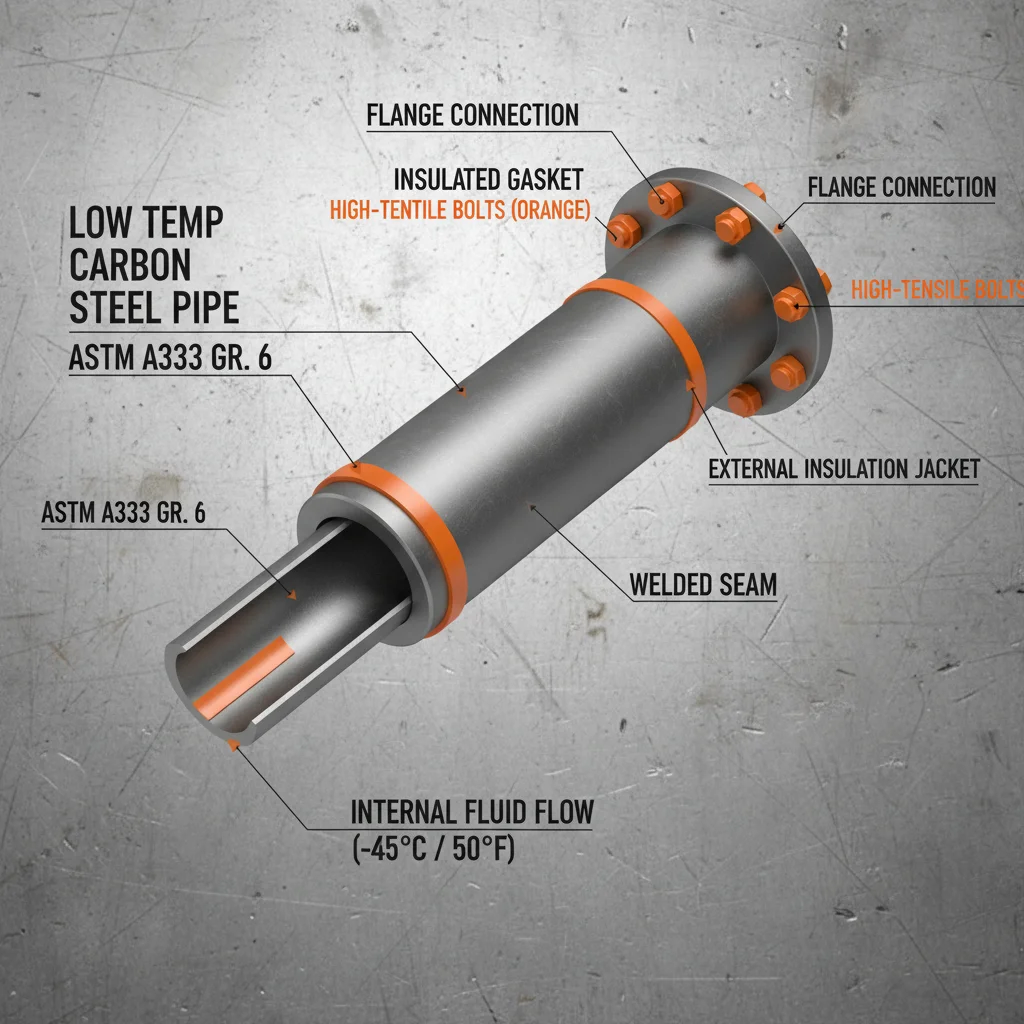
Material grade and temperature range: match the required grade to the service condition. Grades include ASTM A53, API 5L, ASTM A106, ASTM A333 and ASTM A335, with A333 for cryogenic service and A335 for high-temperature service up to 650°C.
Protection and verification: check whether bare, black, galvanized, FBE or 3LPE/3LPP protection is needed, and identify the inspection and documentation requirements, including hydrostatic testing, NDT, dimensional inspection and material test reports where applicable.
A carbon steel pipe price is meaningful only when the quoted pipe matches the project’s service conditions and specification. Comparing a low figure with a higher figure without checking grade, dimensions, manufacturing process, coating and inspection scope can produce an unsuitable shortlist.
For buyers reviewing welded pipe, see the Carbon and Alloy Steel Welded Pipes product page and use the following checks to structure a request for quotation. The published product material identifies ERW, LSAW and helical SAW processes, a stated outside-diameter range from 1/2 inch to 100 inches and larger, several wall-thickness schedules, multiple end finishes, listed material grades and coating options.
1. Start with the application
First define what the pipe must do. The product range covers general construction, oil and gas transmission, power-plant service, cryogenic service, high-temperature applications and structural frameworks. These are different selection contexts, so an application label alone is not enough to choose a grade or wall thickness.
Record the service condition, operating environment, required pressure or temperature basis, connection method and any project specification. If those requirements are not yet defined, a carbon steel pipe price cannot be compared on a like-for-like basis. This product is not an automatic fit for every service; specialist engineering review and purchaser requirements remain necessary.
2. Confirm the manufacturing process
The product material lists three welded manufacturing routes: electric resistance welding (ERW), longitudinal submerged arc welding (LSAW) and helical submerged arc welding. Ask the supplier to identify the proposed process in the quotation and confirm that it is acceptable for the intended application and governing project requirements.
Do not treat ERW, LSAW and helical SAW as interchangeable descriptions. The process should be reviewed together with diameter, wall thickness, grade, testing and the applicable standard. A quotation that omits the process may not provide enough information for a technical comparison.
3. Specify dimensions, length and ends
The published dimensions include outside diameters from 1/2 inch (21.3 mm) to 100 inches (2,540 mm) and larger. Listed wall-thickness options include SCH 10, SCH 20, STD, SCH 40, SCH 80, XS and XXS, with custom options noted. Length choices include random lengths of 18–24 feet or cut-to-length service.
The end finish also affects fit and preparation. The options are plain end, beveled, and threaded and coupled (T&C). Include outside diameter, wall thickness or schedule, length tolerance, end finish and quantity in the same inquiry so that the quoted carbon steel pipe price refers to a defined product.
4. Match grade and temperature requirements
The product material lists ASTM A53, API 5L, ASTM A106, ASTM A333 and ASTM A335 among its standard grades. It identifies A333 for cryogenic service and A335 for high-temperature service up to 650°C. These references should be treated as selection checkpoints, not as a reason to choose a grade without reviewing the complete design and purchasing specification.
Ask for the exact grade, edition or project standard required, and the corresponding inspection and documentation package. If the application, temperature range or governing standard is unknown, this welded-pipe option should remain under technical review rather than being presented as a confirmed match.
5. Include corrosion protection in the comparison
The protection options are bare, black, galvanized, FBE and 3LPE/3LPP. The correct choice depends on the exposure environment, installation design and project coating requirements. Coating should therefore appear as a separate line in the request for quotation rather than being assumed to be included in the base price.
Compare the coating type, coverage requirements, surface preparation requirements and any inspection or acceptance criteria specified by the project. The product page alone does not establish which coating is appropriate for a particular site.
6. Check testing and records
The published material lists hydrostatic testing, nondestructive testing using UT/ET and dimensional inspection. It also refers to material certification and mill test reports. Before placing an order, state which tests, records and traceability documents are required and ask the supplier to confirm them in the quotation and order documentation.
Certification or test language should not be inferred from a product name. Buyers should verify the applicable standard, inspection scope and documents for the specific order, including whether third-party inspection or additional project requirements apply.
A practical quotation checklist
Provide the supplier with:
- Application and service condition
- Outside diameter and wall thickness or schedule
- Required grade and governing standard
- Welded manufacturing process requirement, if specified
- Quantity, length and dimensional tolerances
- End finish
- Coating or surface protection
- Testing, inspection and documentation requirements
- Delivery destination and any commercial information needed for the quotation
Conclusion
The right way to assess a carbon steel pipe price is to compare complete, technically defined quotations—not isolated numbers. For the carbon and alloy steel welded pipe range, the key checks are application fit, process, dimensions, grade, temperature range, coating, testing and records.
THE PEOPLE

About the author
THE COMPANY
HANDAN BENKOO METAL CO., LTD.
BENKOO METAL is a trusted steel material distributor serving critical industries worldwide, including Oil & Gas transportation, Refinery & Chemical, Marine & Offshore, Nuclear & Wind Power, and Mining.
BENKOO METAL maintain a 2,800-ton inventory of nickel alloy, stainless steel, and alloy steel materials. This strategic stocking enables us to provide comprehensive, real-time material solutions tailored to unique project requirements—with no minimum order quantity (MOQ) limitations.…
YOUR NEXT STEP
Bring your brief. Start a useful conversation.
Use case, specification, quantity and delivery window: make the next conversation specific.