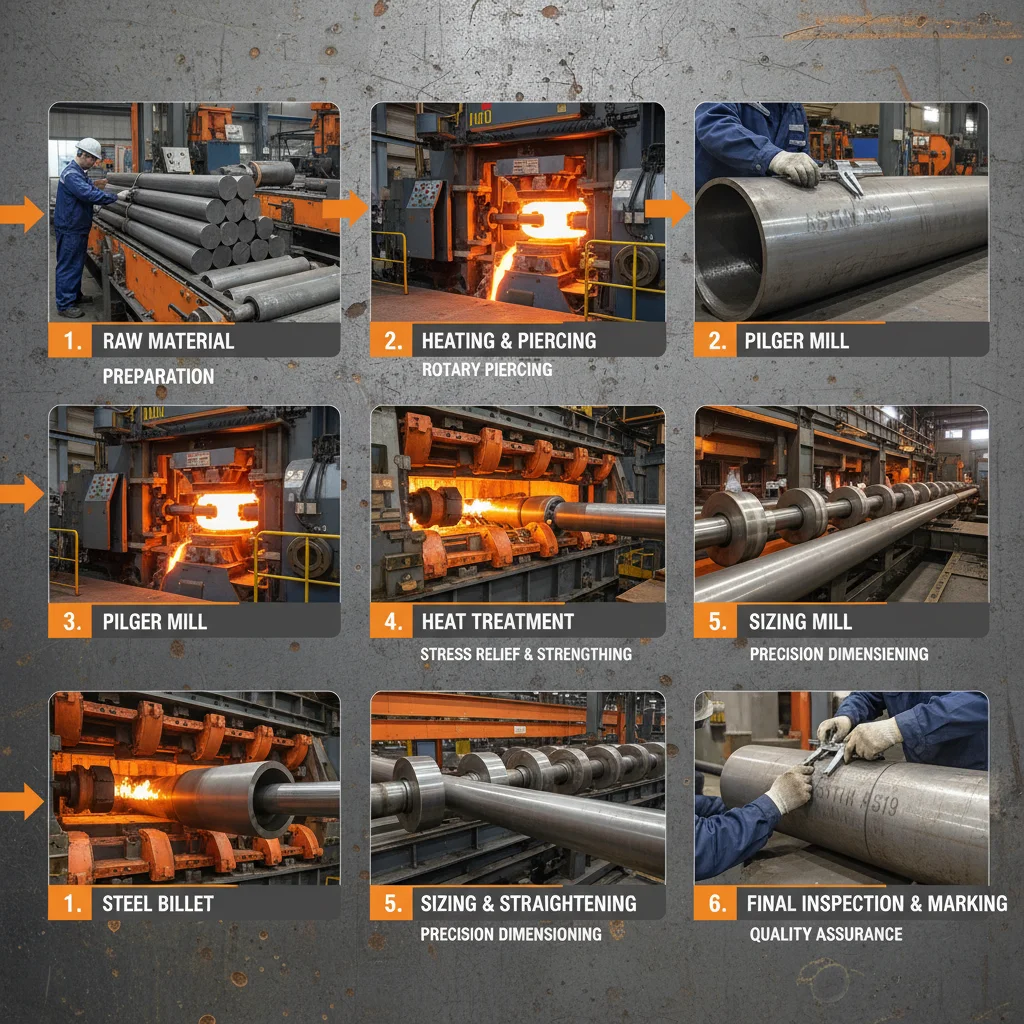
Titanium round stock represents a crucial material in modern engineering and manufacturing, offering a unique combination of strength, corrosion resistance, and lightweight properties. Its applications span across diverse industries, from aerospace and medical implants to chemical processing and marine engineering. Understanding the characteristics and potential of titanium round stock is increasingly vital for innovation and addressing challenges in various sectors globally.
The demand for titanium round stock is driven by the need for high-performance materials capable of withstanding harsh environments and demanding applications. Global industrial growth, particularly in sectors like aerospace and healthcare, fuels this demand. However, challenges related to cost and production scalability remain, prompting ongoing research and development to optimize manufacturing processes and expand accessibility.
Ultimately, titanium round stock plays a vital role in enabling advancements in critical infrastructure, improving product performance, and ensuring long-term durability across a broad spectrum of industries. Its unique properties make it an indispensable material for solving complex engineering problems and fostering technological innovation worldwide.
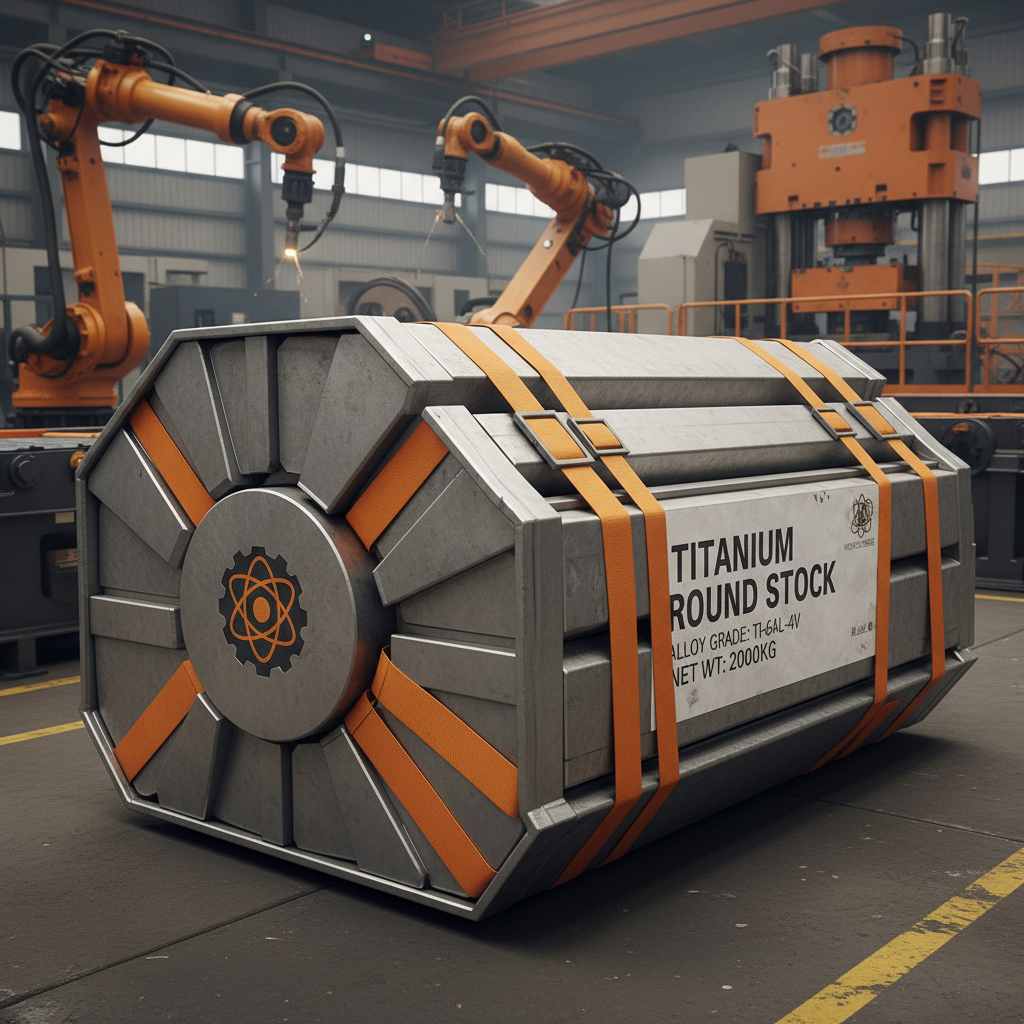
Introduction to Titanium Round Stock
Titanium round stock is a solid cylindrical form of titanium, a metallic element known for its exceptional strength-to-weight ratio and remarkable resistance to corrosion. It’s a fundamental building block for a wide array of components and structures, often serving as the starting material for machining, forging, or other fabrication processes.
The increasing reliance on titanium round stock stems from its ability to perform reliably in demanding environments where other materials would fail. Industries are continually seeking materials that offer both durability and lightness, and titanium round stock delivers precisely that, making it crucial for advancements in diverse fields.
Global Relevance and Industry Context
Globally, the demand for titanium round stock is consistently growing, with the aerospace industry being a major driver. According to reports from ISO, the aerospace sector accounts for over 60% of titanium consumption. This demand is fueled by the need for lighter, more fuel-efficient aircraft. Beyond aerospace, the medical industry also represents a significant portion of demand, utilizing titanium round stock for surgical implants due to its biocompatibility and resistance to body fluids.
The chemical processing industry relies heavily on titanium round stock for its resistance to highly corrosive substances. Marine applications also benefit from its ability to withstand saltwater environments. However, a major challenge lies in the relatively high cost of titanium compared to other metals like steel or aluminum. This limits its adoption in cost-sensitive applications, prompting research into more affordable production methods.
Furthermore, geopolitical factors and supply chain disruptions can impact the availability and price of titanium round stock. Diversification of sourcing and development of domestic production capabilities are becoming increasingly important strategies for ensuring a stable supply and mitigating risks within the global manufacturing landscape.
Defining Titanium Round Stock
Titanium round stock, simply put, is a solid titanium bar with a circular cross-section. It’s typically produced through processes like hot rolling, forging, or extrusion, resulting in a material ready for further shaping and finishing. The specific grade of titanium determines its precise composition and, consequently, its mechanical and chemical properties.
Its connection to modern industry and humanitarian needs is profound. In aerospace, it enables the construction of lighter and more durable aircraft. In medicine, it provides biocompatible implants that improve patient outcomes. In disaster relief, its strength and corrosion resistance can be leveraged in temporary shelters and infrastructure components.
The availability of various diameters and grades of titanium round stock allows engineers and manufacturers to select the optimal material for their specific applications, balancing performance requirements with cost considerations. Its versatility makes it a cornerstone material in a growing number of critical sectors.
Key Properties of Titanium Round Stock
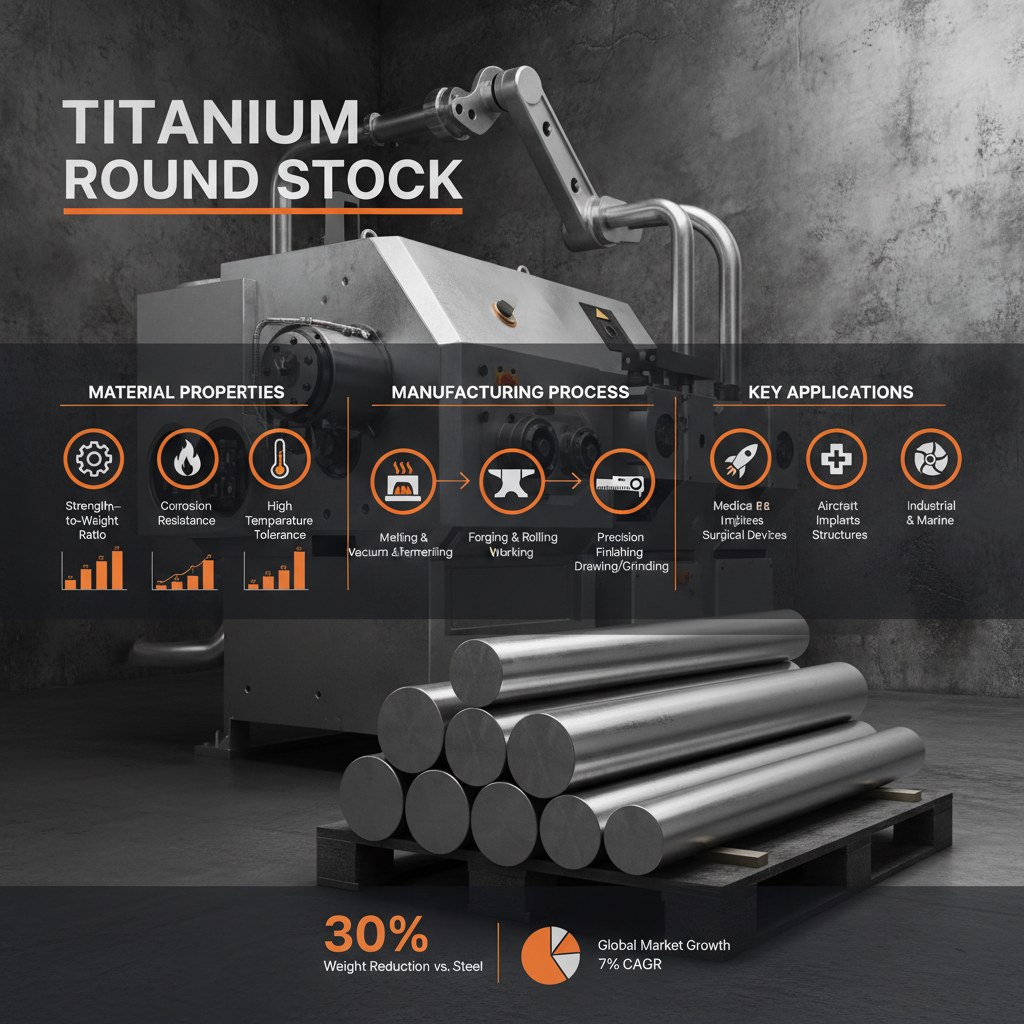
Titanium round stock boasts several key properties that make it highly desirable. First and foremost is its exceptional strength-to-weight ratio – it’s as strong as steel but significantly lighter, making it ideal for applications where weight reduction is critical. Second is its outstanding corrosion resistance; it resists degradation even in harsh chemical environments and saltwater.
Further, titanium exhibits excellent fatigue resistance, meaning it can withstand repeated stress cycles without failing. It also has a high melting point, making it suitable for high-temperature applications. Finally, it is biocompatible, meaning it doesn’t cause adverse reactions within the human body, making it a premier choice for medical implants.
Titanium Round Stock Property Comparison
Applications of Titanium Round Stock
The applications of titanium round stock are incredibly diverse. In aerospace, it’s used extensively in aircraft engines, airframes, and fasteners, contributing to increased fuel efficiency and improved performance. The medical industry utilizes it for orthopedic implants, dental implants, and surgical instruments due to its biocompatibility and resistance to corrosion.
Chemical processing plants rely on titanium round stock for components exposed to corrosive chemicals. Marine applications benefit from its resistance to saltwater corrosion, finding use in propellers, pumps, and heat exchangers. Additionally, it's employed in sports equipment like golf clubs and bicycle frames where a high strength-to-weight ratio is crucial.
Advantages and Long-Term Value
The advantages of using titanium round stock extend beyond its inherent material properties. Its long-term durability translates into reduced maintenance costs and increased lifespan for components and structures. Its lightweight nature contributes to fuel efficiency in aerospace and improved performance in sporting goods.
The biocompatibility of titanium fosters innovation in the medical field, leading to more successful and longer-lasting implants. From an emotional standpoint, utilizing titanium round stock ensures safety and reliability in critical applications, fostering trust and confidence in the products and infrastructure it supports. The investment in titanium represents a commitment to quality and long-term value.
Its resistance to corrosion minimizes the risk of failures and environmental damage, promoting sustainability and reducing the need for frequent replacements. The overall lifecycle cost benefits, coupled with its superior performance, make titanium round stock a strategically advantageous material choice.
Future Trends and Challenges
Looking ahead, several trends are poised to impact the future of titanium round stock. Advancements in additive manufacturing (3D printing) are opening up new possibilities for creating complex geometries and reducing material waste. The development of more cost-effective titanium alloys and production processes is also a key area of research.
Furthermore, the increasing focus on sustainability is driving demand for eco-friendly manufacturing practices and the development of recyclable titanium alloys. Digital transformation and automation are streamlining production processes and improving quality control. The integration of titanium round stock with smart materials and sensors will enable the creation of intelligent structures with enhanced functionality.
However, challenges remain. The high cost of titanium, while gradually decreasing, continues to limit its widespread adoption. Ensuring a secure and resilient supply chain, particularly in light of geopolitical uncertainties, is another critical concern. Addressing these challenges will be crucial for unlocking the full potential of titanium round stock in the years to come.
Summary of Key Challenges and Potential Solutions for Titanium Round Stock
| Challenge |
Impact on Titanium Round Stock |
Potential Solution |
Implementation Difficulty (1-10) |
| High Production Cost |
Limits adoption in cost-sensitive applications |
Investment in advanced manufacturing techniques (e.g., additive manufacturing) |
7 |
| Supply Chain Vulnerabilities |
Disruptions can impact availability and pricing |
Diversification of sourcing and development of domestic production |
6 |
| Limited Recyclability |
Contributes to environmental concerns |
Development of closed-loop recycling processes for titanium alloys |
8 |
| Machining Challenges |
Titanium's hardness makes it difficult to machine efficiently |
Implementation of advanced machining techniques and cutting tools |
5 |
| Alloy Complexity |
Different applications require specific alloy compositions |
Standardization of alloy designations and improved material characterization |
4 |
| Competition from Alternative Materials |
Materials like carbon fiber and advanced aluminum alloys offer competing properties |
Highlighting the unique benefits of titanium (corrosion resistance, biocompatibility) |
6 |
FAQS
The cost of titanium round stock is influenced by several key factors, including the raw material sourcing (rutile and ilmenite ore), the energy-intensive production process, the specific alloy composition, and market demand. Processing costs, particularly those associated with refining and shaping, significantly contribute to the final price. Geopolitical factors and supply chain disruptions can also lead to price fluctuations. Understanding these dynamics is crucial for cost-effective procurement.
Different grades of titanium round stock possess varying levels of mechanical properties, corrosion resistance, and biocompatibility. For instance, Grade 5 (Ti-6Al-4V) is widely used in aerospace due to its high strength and temperature resistance, while Grade 2 is often preferred for chemical processing due to its excellent corrosion resistance. Medical implants typically utilize Grade 23 (Ti-6Al-7Nb) for enhanced biocompatibility. Selecting the appropriate grade is critical for achieving optimal performance in a specific application.
Machining titanium round stock requires specialized techniques due to its hardness and tendency to work-harden. Sharp cutting tools, low cutting speeds, and ample cooling lubrication are essential to prevent tool wear and ensure dimensional accuracy. It's also important to avoid excessive heat buildup, which can alter the material's properties. Proper fixturing and careful selection of machining parameters are critical for successful titanium machining.
Yes, titanium round stock is recyclable, but the process is complex and challenging. Unlike many metals, titanium scrap cannot be directly melted and recast due to contamination issues. Specialized processes, such as plasma arc melting or vacuum arc remelting, are required to purify the titanium and restore its properties. Establishing efficient and cost-effective recycling infrastructure remains a significant hurdle, hindering widespread titanium recycling efforts.
Titanium round stock is finding increasing applications in the renewable energy sector. It's utilized in offshore wind turbines due to its corrosion resistance in harsh marine environments. In tidal energy systems, titanium's durability and resistance to saltwater make it ideal for components exposed to constant immersion. Furthermore, titanium is being explored for use in hydrogen production and storage systems, leveraging its compatibility with hydrogen environments.
Additive manufacturing, or 3D printing, is revolutionizing the production of titanium round stock components. It allows for the creation of complex geometries that are difficult or impossible to achieve with traditional manufacturing methods, reducing material waste and lead times. While the initial investment in additive manufacturing equipment can be significant, it offers the potential to reduce overall costs for certain applications, particularly for low-volume production runs and customized parts.
Conclusion
Titanium round stock stands as a vital material in a multitude of industries, offering a unique blend of strength, corrosion resistance, and biocompatibility. From aerospace and medical implants to chemical processing and renewable energy, its versatility and exceptional properties make it indispensable for addressing critical engineering challenges and driving innovation. Understanding its characteristics, applications, and future trends is crucial for professionals across diverse sectors.
Looking ahead, continued advancements in manufacturing processes, alloy development, and recycling technologies will unlock even greater potential for titanium round stock. By addressing existing challenges related to cost and supply chain resilience, we can ensure its widespread availability and contribute to a more sustainable and technologically advanced future. For high-quality titanium round stock solutions, visit our website: www.benkoometal.com