The global demand for high-performance infrastructure has placed a renewed spotlight on the precision and scalability of CHINA structural steel tubing. As urban architecture and industrial plants evolve toward more complex geometries and higher load-bearing requirements, the focus has shifted from simple mass production to the strict adherence to metallurgical consistency and dimensional tolerance.
This shift is particularly critical in sectors where structural failure is not an option, such as in high-pressure piping systems or modular industrial frames. The challenge for engineers today lies in balancing the cost-efficiency of large-scale sourcing with the rigorous quality benchmarks required for specialized alloys and seamless constructions, ensuring that the material properties match the environmental stressors of the deployment site.
This technical analysis examines the current state of structural steel tubing production, the critical selection criteria for industrial procurement, and how high-purity material processing—such as that used in semiconductor-grade tubing—is influencing the broader standards of the steel industry to ensure long-term structural integrity.

Metallurgical Foundations of Structural Tubing

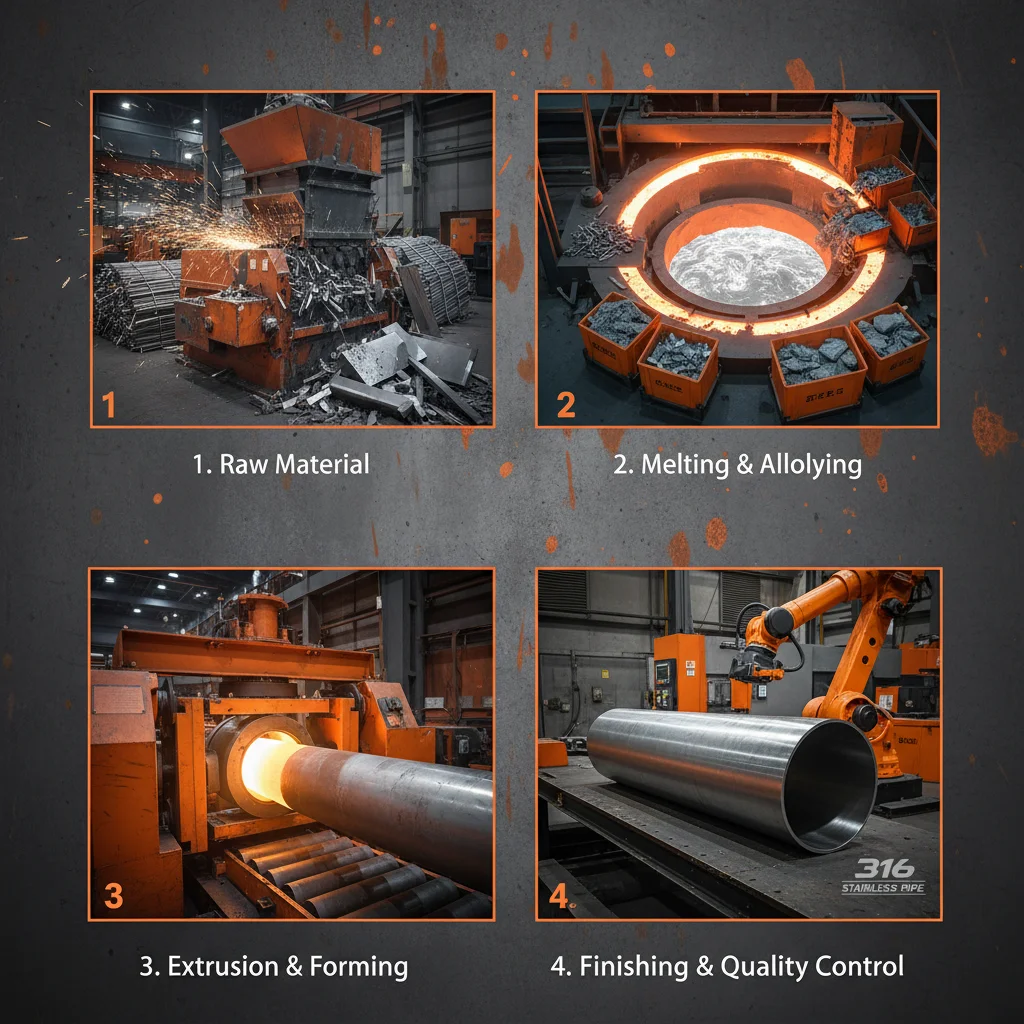
Structural steel tubing is defined by its ability to maintain axial strength and resist torsional deformation under sustained loads. The metallurgical integrity of these components depends heavily on the control of carbon content and the homogeneity of the grain structure during the rolling or extrusion process.
In the context of modern manufacturing, the integration of alloy elements like chromium and nickel enhances corrosion resistance, while precise heat treatment processes ensure that the tubing can withstand cyclic loading without premature fatigue failure.
Critical Dimensional and Material Specifications
The utility of CHINA structural steel tubing is governed by its wall thickness consistency and outside diameter (OD) precision. Variations in wall thickness can create localized stress concentrations, which significantly reduce the theoretical load capacity of the entire structure.
Beyond dimensions, the chemical composition—specifically the ratio of manganese to carbon—determines the weldability and ductility of the steel. For high-stress applications, the yield strength must be verified through standardized Mill Test Certificates (MTC) to ensure the material behaves predictably under peak loads.
Surface finish also plays a pivotal role. While standard structural tubes are often left in a mill-finish state, specialized applications require mechanical polishing or electro-polishing to eliminate surface micropores that could otherwise act as initiation points for stress-corrosion cracking.
Engineering Trade-offs: Seamless vs. Welded
The choice between seamless and welded tubing represents a fundamental engineering decision based on the intended pressure and stress profile. Seamless tubing is produced by piercing a solid billet, resulting in a uniform structure without a longitudinal seam, which inherently increases its pressure rating and reliability.
However, for critical infrastructure, the weld zone in ERW (Electric Resistance Welded) tubing remains a potential point of vulnerability. Engineers must evaluate the heat-affected zone (HAZ) to ensure that the welding process has not compromised the metallurgical properties of the base steel.
Performance Assessment by Alloy Grade
Evaluating the suitability of different steel grades requires a normalized assessment of their mechanical properties. While standard carbon steels provide the necessary rigidity for general construction, advanced alloys are required for corrosive or high-temperature environments.
The following data represents a normalized engineering rating based on common industry benchmarks for strength, corrosion resistance, and purity across various structural categories.
Normalized Engineering Performance Rating
Industrial Deployment and Integration
In representative engineering scenarios, the integration of structural tubing into larger systems requires precise alignment and welding protocols. For instance, in oil and gas transportation or refinery frameworks, the tubing must not only support mechanical loads but also resist atmospheric corrosion through the application of protective coatings or the selection of high-PREN (Pitting Resistance Equivalent Number) alloys.
Successful deployment depends on the coordination between the material supplier and the onsite fabrication team. Ensuring that the tubing arrives with correct end-preparations (such as beveling for weld joints) reduces onsite labor and minimizes the risk of introducing defects during the assembly phase.
Evolution of Purity Standards in Steel Tubing
The industry is witnessing a convergence between heavy structural steel and high-purity tubing. The techniques used for semiconductor-grade materials—such as vacuum melting and electro-polishing—are increasingly being adapted for specialized structural components in the pharmaceutical and nuclear industries.
This evolution is driven by the need for "ultra-clean" structural environments where ionic contamination or surface particulates can compromise the process. The adoption of strict Ra (surface roughness) reporting is becoming a standard requirement even for non-fluid carrying structural supports in cleanroom environments.
Future trends suggest a move toward "intelligent" structural tubing, where embedded sensors or specialized alloy coatings provide real-time data on structural health and corrosion rates, allowing for predictive maintenance rather than reactive repair.
Procurement Selection Matrix
Selecting the appropriate CHINA structural steel tubing involves a multi-dimensional analysis of the operating environment, load requirements, and budget constraints.
The following matrix provides a framework for matching configuration types to specific industrial application profiles, ensuring that the chosen material exceeds the minimum safety factors required by international standards.
Buyers should prioritize Mill Test Certificates (MTC) and traceability (Heat Numbers) to verify that the delivered product aligns with the specified metallurgical grade.
| Configuration Type | Primary Metallurgy | Environmental Factor | Recommended Use Case |
|---|---|---|---|
| Baseline Grade | Low-Carbon Steel | Controlled Indoor | General Framing / Supports |
| Standard Corrosion | 304 Stainless | Mildly Corrosive | Food / Beverage / General Industrial |
| High-Purity Grade | 316L / 316LVM | Chemical Exposure | Pharmaceutical / Lab Piping |
| Heavy-Duty / Marine | Duplex 2205 | High-Chloride / Salt | Offshore Platforms / Desalination |
| Extreme Service | Nickel Alloys (C276) | Aggressive Acidic | Chemical Processing / Furnaces |
| Specialized Precision | Titanium Gr. 2 | Ultra-Aggressive | Aerospace / Specialized Chemical |
Technical FAQ
Load capacity is verified through a combination of material yield strength testing (as documented in the Mill Test Certificate) and structural calculations based on the tubing's section modulus and moment of inertia. Engineers typically apply a safety factor (usually 1.5x to 3x) to the theoretical limit to account for potential material variances and dynamic loading conditions.
Wall thickness variance creates "thin spots" that act as stress concentrators. Under axial compression, this can lead to premature buckling. In pressure-bearing applications, it reduces the maximum allowable working pressure (MAWP). High-precision tubing minimizes this variance to ensure uniform stress distribution across the entire length of the component.
Seamless tubing is preferred in high-pressure environments, extreme temperature fluctuations, or where the risk of seam failure is unacceptable. Because there is no weld seam, it offers superior homogeneity and is less susceptible to stress-corrosion cracking along a linear axis, making it the standard for critical Oil & Gas and Nuclear applications.
Electro-polishing removes the "peaks and valleys" of the metal surface at a microscopic level, reducing the surface area exposed to corrosive agents. This not only enhances cleanliness by removing embedded contaminants but also eliminates micro-cracks that can lead to fatigue failure, significantly extending the service life in aggressive environments.
Essential documentation includes the Mill Test Certificate (MTC) according to EN 10204, which provides the heat number and chemical analysis. For specialized tubes, surface roughness reports (Ra) and cleanroom packaging records are necessary to verify that the material meets purity standards required for semiconductor or pharmaceutical applications.
304 is suitable for general indoor environments with low corrosive risk. 316L is preferred for outdoor, coastal, or chemical-heavy environments due to the addition of molybdenum, which provides superior resistance to pitting and crevice corrosion. The "L" denotes low carbon, which is critical for preventing sensitization during welding.
Engineering Summary
The reliability of modern industrial infrastructure depends on the precision of its smallest components. The shift toward higher purity and tighter tolerances in CHINA structural steel tubing demonstrates a broader industry trend where metallurgical consistency is prioritized over simple volume. By aligning material selection with specific environmental stressors and load profiles, engineers can maximize the lifecycle of their assets while minimizing maintenance overhead.
Ultimately, the transition from standard carbon steels to high-performance alloys like Duplex or Nickel-based systems is a strategic investment in risk mitigation. For professionals seeking high-precision material solutions, consulting technical documentation and ensuring full traceability via MTCs remains the most effective path to structural success.