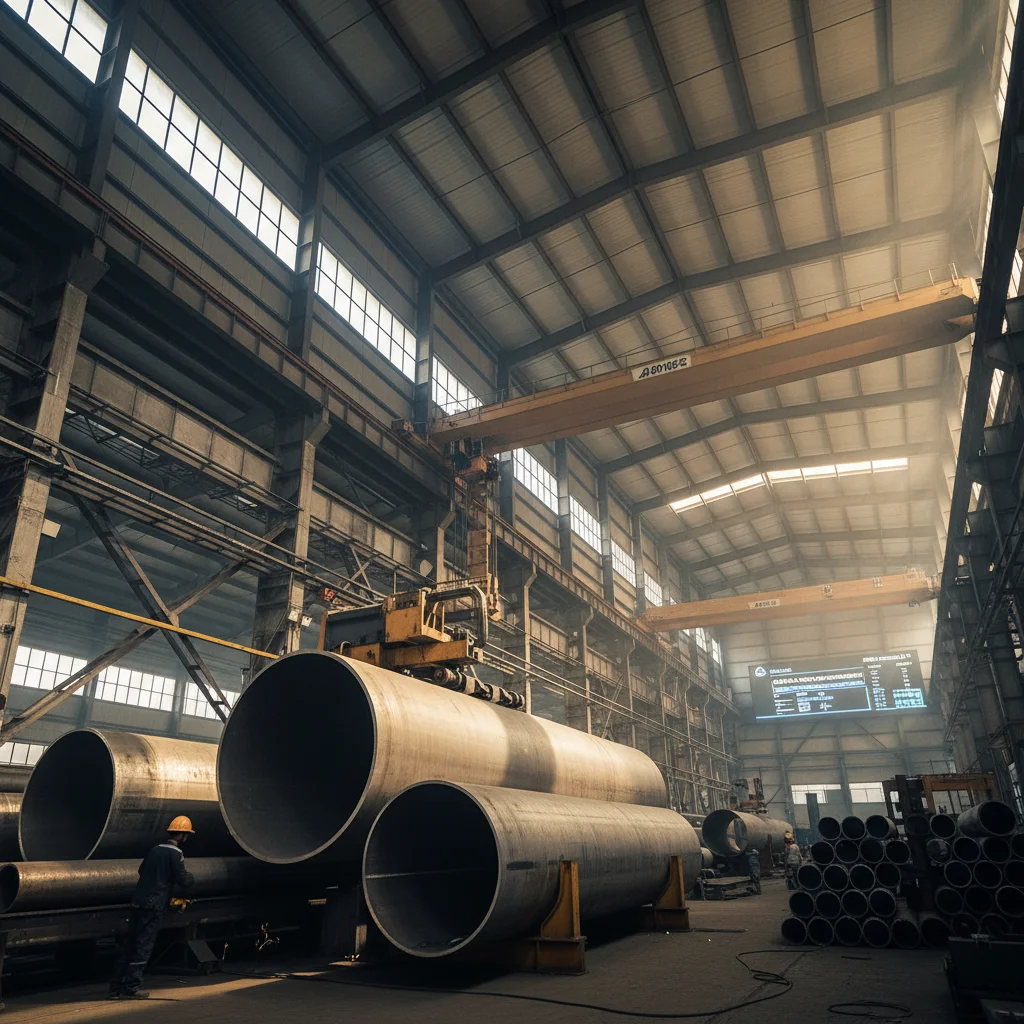
Identifying reliable carbon steel pipe suppliers is a critical strategic decision for industries ranging from petrochemical refining to heavy infrastructure. These suppliers provide the essential conduits for fluid transport, requiring a precise balance of tensile strength, weldability, and corrosion resistance to ensure system integrity under high-pressure operational conditions.
Procurement teams often face significant challenges, including volatile material pricing, inconsistent grade certifications, and lead-time delays that can stall multi-million dollar projects. The ability to source pipes that strictly adhere to international standards like ASTM and API is not merely a quality preference but a safety requirement in hazardous environments.
This technical guide explores the criteria for evaluating carbon steel pipe suppliers, the impact of material grades on longevity, and a comparative analysis of supply chain models. Readers will gain the insights needed to optimize their sourcing strategy and reduce total cost of ownership through better material selection.

1Evaluating Carbon Steel Pipe Sourcing Standards

When auditing carbon steel pipe suppliers, the first priority is the verification of Mill Test Reports (MTRs). These documents provide the chemical composition and mechanical properties of the steel, ensuring that the heat number of the pipe matches the certification. Without rigorous MTR verification, engineers risk installing materials that may fail under unexpected thermal expansion or high-pressure surges.
Furthermore, the adherence to international standards such as ASTM A106 for high-temperature service or ASTM A53 for general purpose use determines the pipe's suitability. A reputable supplier does not just provide the product but offers technical guidance on which standard minimizes the risk of hydrogen-induced cracking or stress corrosion.
The evaluation process should also include a review of the supplier's quality control (QC) protocols. This involves assessing their non-destructive testing (NDT) capabilities, such as ultrasonic or radiographic testing, which are essential for identifying internal defects in seamless piping before they reach the project site.
2Key Material Properties and Grade Selection
The selection of the correct carbon steel grade is a trade-off between cost, strength, and environmental resistance. For most industrial applications, the focus is on the carbon content, as higher carbon levels increase hardness and strength but can reduce weldability and ductility, making the material more prone to brittle fracture at low temperatures.
Suppliers often categorize their inventory into seamless and welded pipes. Seamless pipes, produced by piercing a solid billet, offer superior pressure ratings and are preferred for high-pressure steam or oil lines. Welded pipes, while more cost-effective for large diameters, require strict weld-seam inspection to ensure they can withstand longitudinal stress.
Surface finishes and protective coatings also play a vital role. Depending on the environment, carbon steel may require galvanization or specialized epoxy linings to prevent oxidation. Expert suppliers will recommend coatings based on the pH levels of the transported medium and the humidity of the installation site.
3Industrial Applications and Operational Constraints
Carbon steel piping is the backbone of the Oil & Gas sector, used extensively in upstream gathering lines and downstream refinery processes. In these environments, the primary constraint is internal corrosion caused by H2S or CO2. Suppliers must be able to provide materials that can be paired with corrosion inhibitors or internal cladding to extend the service life of the infrastructure.
In the power generation and nuclear sectors, carbon steel pipes are subjected to intense thermal cycling. This requires materials with stable coefficients of thermal expansion to prevent joint fatigue. The integration of high-precision machining for flanges and fittings is necessary to ensure leak-proof connections in high-risk zones.
Mining and chemical processing plants utilize these pipes for slurry transport and chemical feedstock. Here, the limitation is often abrasive wear. Selecting pipes with a slightly thicker wall (increased schedule) can provide a "corrosion allowance," ensuring the pipe remains structurally sound even as the inner diameter gradually erodes.
4Analyzing Supplier Performance Metrics
Measuring the efficiency of carbon steel pipe suppliers requires looking beyond the unit price. Total cost of ownership (TCO) is heavily influenced by the accuracy of the delivery schedule and the rate of material rejection upon arrival. A supplier with a low price but a 10% rejection rate is more expensive than a premium supplier with zero defects.
Key performance indicators (KPIs) include Order Fulfillment Accuracy, MTR Compliance Rate, and Mean Time to Delivery. By quantifying these metrics, procurement managers can identify bottlenecks in their supply chain and shift toward partners who prioritize reliability over short-term cost savings.
carbon steel pipe suppliers Performance Metrics
As illustrated in the performance metrics, optimized suppliers often utilize Just-In-Time (JIT) inventory systems. By maintaining a strategic buffer of common grades (like A106 Grade B), they can reduce lead times from weeks to days, allowing construction teams to maintain momentum without overloading the project site with excess inventory.
5Procurement Strategies for Industrial Piping
Effective procurement begins with a detailed Material Take-Off (MTO). Rather than ordering based on rough estimates, engineers should specify exact wall thicknesses, tolerances, and end-prep requirements (e.g., beveled ends for welding). This precision prevents waste and reduces the need for on-site modifications, which can compromise the pipe's structural integrity.
Evaluating the supplier's logistics capability is equally important. Carbon steel pipes are heavy and cumbersome; the ability to provide specialized transport and offloading equipment is a value-add that reduces the risk of surface damage during transit. Damage to the internal bore or external coating can lead to premature failure.
Finally, consider the supplier's ability to provide value-added services. This includes pre-cutting to length, threading, or providing prefabricated spools. By shifting these tasks from the field to the supplier's controlled facility, projects can achieve higher weld quality and significantly shorter installation windows.
6Supply Chain Innovations in Steel Distribution
The modern steel supply chain is shifting toward digital transparency. Leading carbon steel pipe suppliers now utilize real-time inventory tracking systems, allowing customers to see available stock levels and current transit status. This integration reduces the uncertainty associated with traditional procurement cycles.
Another innovation is the move toward "Green Steel" and sustainable sourcing. There is an increasing demand for pipes produced in electric arc furnaces (EAF) which have a lower carbon footprint than traditional blast furnaces. Forward-thinking suppliers are beginning to track the embodied carbon of their materials to help clients meet ESG goals.
Modular distribution hubs are also becoming common. By strategically placing inventory closer to major industrial clusters, suppliers can offer "last-mile" delivery in hours, fundamentally changing how project managers handle urgent repairs and unplanned shutdowns in critical refineries.
7Comparative Analysis of Supply Models
Choosing between a direct-from-mill model and a specialized distributor involves weighing the benefits of scale against the benefits of flexibility. Mills offer the lowest unit cost for massive volumes but often impose high Minimum Order Quantities (MOQs) and have rigid delivery schedules.
In contrast, distributors provide essential value by breaking bulk and managing complex inventories. They can supply a mix of grades, sizes, and complementary fittings in a single shipment, which is essential for the diverse needs of a construction site where thousands of different components are required simultaneously.
| Model Feature | Direct Mill Sourcing | Specialized Distributor | Impact on Project |
|---|---|---|---|
| Unit Pricing | Lowest (High Volume) | Moderate (Service Premium) | Budget vs. Flexibility |
| Order Minimums | Very High (MOQ) | Low to Zero | Inventory Carrying Cost |
| Lead Times | Long (Production Cycle) | Short (Stocked Items) | Schedule Stability |
| Material Variety | Single Grade/Size | Multi-Grade/Mixed Sizes | Procurement Efficiency |
| QC Verification | Standard Mill Certs | Additional Third-Party QC | Risk Mitigation |
| Logistics Control | Bulk Shipping Only | Customized Last-Mile | Site Congestion Management |
For projects with high complexity and varying requirements, the specialized distributor model—typified by companies like BENKOO METAL—is often the superior choice. Their ability to maintain thousands of tons of diverse inventory allows for a leaner project approach, reducing onsite storage and minimizing the risk of material shortages.
Frequently Asked Questions
Conclusion
Optimizing the procurement of carbon steel pipes requires a shift from a price-centric approach to a value-centric one. By prioritizing rigorous certification verification, selecting the appropriate grade for the operational environment, and leveraging the flexibility of specialized distributors, companies can significantly reduce project risk and operational downtime.
For organizations seeking a reliable supply chain partner capable of providing high-precision carbon steel and alloy materials with comprehensive certification, you can explore the professional material solutions available at www.benkoometal.com.