The global industrial landscape relies heavily on standardized piping systems to ensure safety and efficiency in high-pressure environments. Among these, the astm a106 pipe stands as a cornerstone for carbon steel seamless piping, providing the necessary structural integrity for transporting fluids and gases across diverse temperatures. Understanding the specifications of these pipes is essential for engineers who prioritize leak prevention and long-term operational stability.
Across the energy and chemical sectors, the demand for reliable seamless conduits has led to a rigorous adherence to ASTM international standards. The widespread adoption of the astm a106 pipe is driven by its ability to withstand high temperatures and pressures without the risk of weld-seam failure, which is a critical requirement for boilers and refinery systems. This reliability reduces the risk of catastrophic failures in heavy-duty infrastructure.
Whether you are managing a petrochemical plant or an aerospace facility, selecting the right material is paramount. While BENKOO METAL excels in high-performance solid bars, the industry often integrates these with complementary solutions like the astm a106 pipe to create a robust, end-to-end industrial framework. Combining precision-engineered bars with standardized seamless piping ensures that every mechanical assembly meets global safety certifications.

Global Relevance of astm a106 pipe
The global demand for energy and chemical processing requires materials that can survive extreme thermal cycling and high-pressure surges. The astm a106 pipe is internationally recognized as the gold standard for seamless carbon steel pipes, ensuring that critical infrastructure in North America, Europe, and Asia maintains a uniform safety profile. According to ISO-aligned industrial benchmarks, the use of seamless pipes significantly reduces the probability of leak-related environmental hazards compared to welded alternatives.
In emerging markets, the rapid expansion of refinery capacities has heightened the need for standardized piping. The reliability of the astm a106 pipe allows for faster deployment of oil and gas pipelines, where the cost of downtime can reach millions of dollars per day. By adhering to these strict material specifications, global industries can synchronize their supply chains and ensure interchangeable parts across borders.
Technical Definition and Industrial Meaning
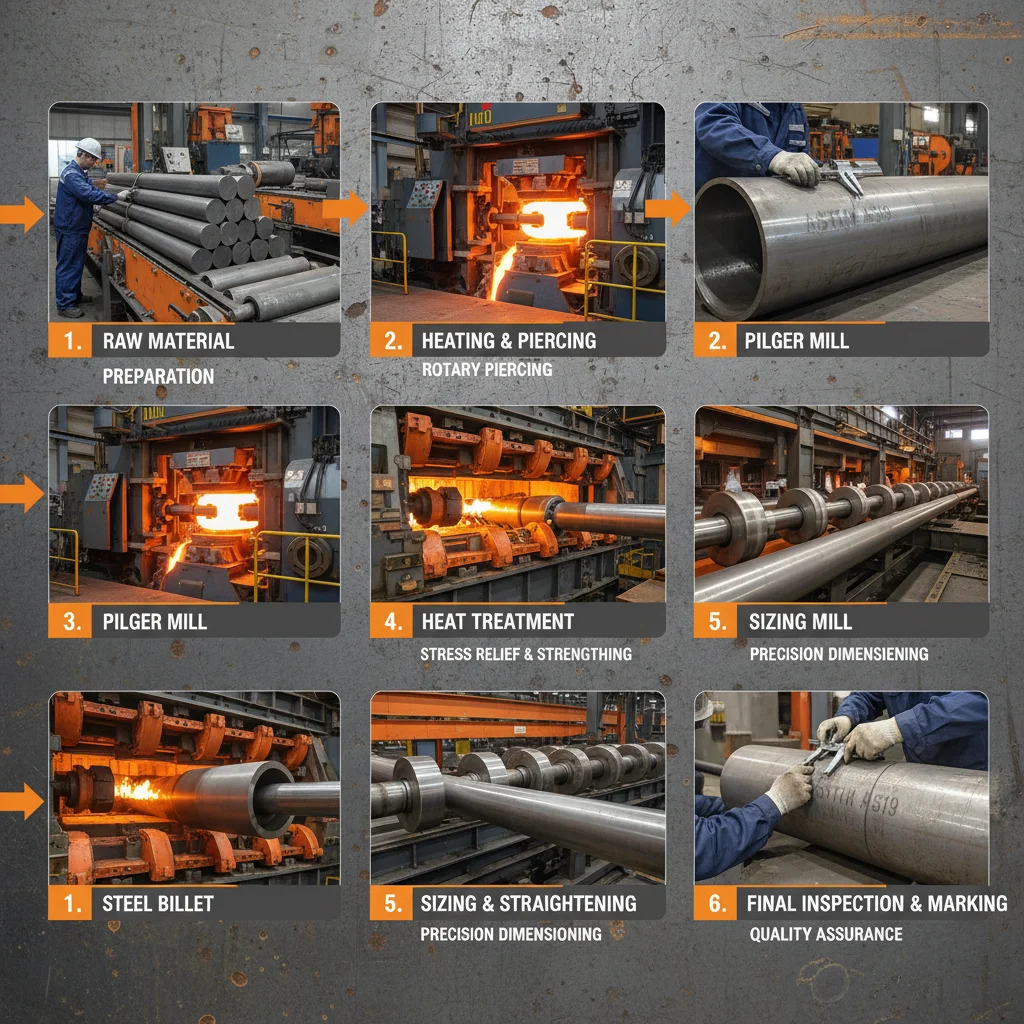
In simple terms, an astm a106 pipe is a seamless carbon steel pipe specifically designed for high-temperature service. Unlike welded pipes, which have a longitudinal or spiral seam, the seamless nature of this pipe is achieved through a piercing or rolling process that eliminates the joint entirely. This structural homogeneity makes it an ideal choice for applications where the failure of a weld could lead to catastrophic explosions or leaks.
From an industrial perspective, the "A106" designation is more than just a number; it is a guarantee of chemical composition and mechanical properties. It signifies that the steel has been processed to withstand significant thermal stress, making it indispensable for steam pipes in power plants and high-pressure lines in chemical reactors. This standardization allows engineers to calculate stress loads with precision, knowing the material will behave predictably.
Furthermore, the connection between these pipes and modern humanitarian needs is often overlooked. In disaster-recovery zones or remote industrial outposts, the ability to quickly install durable, high-pressure water or fuel lines using standardized components like the astm a106 pipe ensures that essential resources are delivered safely and efficiently, supporting both economic recovery and human survival.
Core Components of Piping Durability
The durability of an astm a106 pipe is primarily derived from its seamless construction and the specific carbon content of the steel. By removing the weld seam, the pipe achieves a uniform wall thickness and a consistent crystalline structure, which prevents localized stress concentrations. This homogeneity is critical when the piping is subjected to internal pressures that would otherwise cause a weld to rupture.
Thermal stability is another core factor, as the astm a106 pipe is engineered to maintain its strength even as temperatures rise. In high-heat environments, standard steels can suffer from grain growth or oxidation; however, the metallurgy of A106 is optimized to resist these effects, ensuring that the pipe does not deform or lose its pressure-bearing capacity during prolonged heat exposure.
Finally, the scalability and cost-efficiency of the astm a106 pipe make it a preferred choice for large-scale projects. Because it follows a globally recognized standard, procurement is streamlined, and installation is predictable. When paired with high-performance components like stainless steel solid bars, these pipes form a comprehensive system that balances raw strength with long-term chemical resistance.
Global Applications and Use Cases
Real-world applications of the astm a106 pipe span across the most demanding sectors of heavy industry. In oil and gas exploration, these pipes are used in the transport of hot crude oil and high-pressure steam for enhanced oil recovery. Their ability to handle extreme pressures ensures that extraction processes remain stable even in deep-sea or high-altitude environments where atmospheric pressure varies significantly.
In the chemical processing industry, specifically within reactor cooling systems, the astm a106 pipe is used to move thermal fluids that regulate the temperature of volatile reactions. For instance, in remote industrial zones in Southeast Asia or the Middle East, these pipes are the primary choice for steam distribution networks due to their resistance to thermal fatigue and their ease of integration with standard valves and fittings.
Comparative Efficiency of astm a106 pipe Grades
Long-Term Value and Reliability
The investment in an astm a106 pipe yields significant long-term value by drastically reducing maintenance cycles. Because the material is designed for high-temperature stability, it is less prone to the "creep" deformation that plagues lower-grade steels. This means that plants can operate for longer periods between scheduled shutdowns, directly increasing the overall ROI of the infrastructure.
Beyond the financial metrics, there is an emotional and ethical angle to using certified seamless piping: safety and trust. In sectors like nuclear power or pharmaceutical manufacturing, the failure of a single pipe can have devastating social and environmental consequences. Choosing a certified astm a106 pipe provides engineers and stakeholders with the peace of mind that the system is built to the highest possible safety standards.
Future Trends in Seamless Piping
The future of the astm a106 pipe is being shaped by the global transition toward green energy and digital transformation. As hydrogen energy becomes more prevalent, the industry is exploring how carbon steel seamless pipes can be adapted or coated to prevent hydrogen embrittlement, ensuring that the core structural benefits of A106 are maintained in a zero-carbon economy.
Automation and "Smart Piping" are also emerging trends. We are seeing the integration of IoT sensors directly into the mounting brackets of astm a106 pipe systems to monitor wall thickness and corrosion in real-time. This shift from reactive to predictive maintenance allows operators to detect potential failures before they occur, further extending the service life of the assets.
Sustainability is also driving a move toward more efficient manufacturing processes. New rolling techniques are reducing the energy required to produce seamless pipes, lowering the carbon footprint of the astm a106 pipe without compromising its mechanical properties. This alignment with ESG (Environmental, Social, and Governance) goals is becoming a requirement for major global contracts.
Overcoming Common Piping Challenges
One of the most common limitations in piping practice is the susceptibility of carbon steel to external corrosion in saline or acidic environments. While the astm a106 pipe is internally robust, the outer surface can degrade if left unprotected. The solution lies in advanced industrial coatings and the strategic use of sacrificial anodes, which protect the steel from the surrounding environment.
Another challenge is the precise fitting and alignment of pipes in complex mechanical assemblies. To overcome this, engineers are utilizing 3D laser scanning and precision-cut end-processing. By ensuring that the astm a106 pipe is cut to exact tolerances, the stress on joints is minimized, which further enhances the overall longevity of the system.
Finally, regulatory compliance can be a hurdle during international audits. The solution is the implementation of digital Mill Test Certificates (MTCs). By maintaining a digital twin of every astm a106 pipe batch, companies can provide instant traceability, ensuring that the material used matches the design specifications and meets all safety codes.
Technical Analysis of astm a106 pipe Performance Dimensions
| Material Grade |
Thermal Resistance |
Pressure Capacity |
Reliability Score |
| A106 Grade A |
Moderate |
Standard |
7.5/10 |
| A106 Grade B |
High |
Enhanced |
9.0/10 |
| A106 Grade C |
Ultra-High |
Maximum |
9.5/10 |
| Welded Alternative |
Low |
Moderate |
6.0/10 |
| Cold Drawn A106 |
High |
High Precision |
8.5/10 |
| Hot Finished A106 |
Very High |
High Capacity |
8.0/10 |
FAQS
While both are carbon steel pipes, the astm a106 pipe is specifically designed for high-temperature service and is always seamless. ASTM A53 can be either seamless or welded and is generally used for lower-temperature, general-purpose applications. A106 offers superior performance in boiler and pressure vessel environments where thermal stress is a primary concern.
The primary method is checking the Mill Test Certificate (MTC), which provides the chemical analysis and mechanical test results for that specific heat of steel. Additionally, visual inspection for surface defects and ultrasonic testing (UT) can be used to ensure there are no internal flaws in the seamless wall of the astm a106 pipe.
Standard astm a106 pipe is carbon steel and is not inherently corrosion-resistant against aggressive chemicals. For such environments, it is recommended to use stainless steel or nickel alloys. However, A106 can be used if it is properly internally lined or externally coated with corrosion-resistant materials.
The most common grades are A, B, and C. Grade B is the most widely used in industry due to its balanced strength and weldability. Grade A is softer and more ductile, while Grade C offers the highest tensile strength for the most extreme pressure applications.
No, standard carbon steel pipes like the astm a106 pipe can become brittle at extremely low (cryogenic) temperatures. For cryogenic applications, materials such as 300-series stainless steel or specialized nickel alloys from BENKOO METAL are required to maintain toughness and prevent brittle fracture.
The seamless process used for the astm a106 pipe is more complex and energy-intensive than welding a plate. This typically results in a higher initial procurement cost. However, this is offset by the significantly lower risk of failure and reduced long-term maintenance costs in high-pressure systems.
Conclusion
The astm a106 pipe remains an indispensable asset in the world of industrial engineering, providing a unique combination of thermal stability, pressure resistance, and structural homogeneity. By adhering to a strict global standard, it ensures that critical infrastructure—from oil refineries to power plants—operates with a minimized risk of failure and a maximized lifespan. The synergy between such standardized piping and high-performance metal bars creates the foundation for safe, efficient, and sustainable industrial growth.
Looking forward, the integration of smart monitoring and the adaptation to green energy carriers will continue to evolve the role of seamless piping. For companies seeking to optimize their infrastructure, investing in certified materials is not just a matter of compliance, but a strategic decision to ensure operational longevity. To explore a wide range of complementary high-performance metal solutions, visit our website: www.benkoometal.com.