The api 5l specification serves as the global gold standard for the manufacture and procurement of line pipes, ensuring that the infrastructure transporting oil, gas, and water remains secure under extreme pressures. By establishing rigorous requirements for chemical composition, mechanical properties, and manufacturing tolerances, this standard minimizes the risk of catastrophic failures in critical energy networks. Understanding these guidelines is not merely a technical necessity but a commercial imperative for stakeholders across the energy sector to ensure long-term operational safety.
In a globalized economy, the adherence to a unified api 5l specification allows for seamless international trade and engineering collaboration. Whether a project is situated in the depths of the North Sea or across the vast plains of Central Asia, the consistency provided by API standards ensures that pipes from different manufacturers can be integrated without compromising the integrity of the pipeline. This standardization reduces lead times, optimizes costs, and provides a reliable benchmark for quality assurance.
However, the evolving nature of energy demands—including the shift toward hydrogen transport and the need for higher-pressure transmission—places new demands on traditional steel processing. The current api 5l specification continues to evolve, integrating advanced metallurgy and stricter testing protocols to address these modern challenges. For engineers and procurement officers, staying abreast of these updates is essential to mitigate environmental risks and maximize the lifecycle of industrial assets.
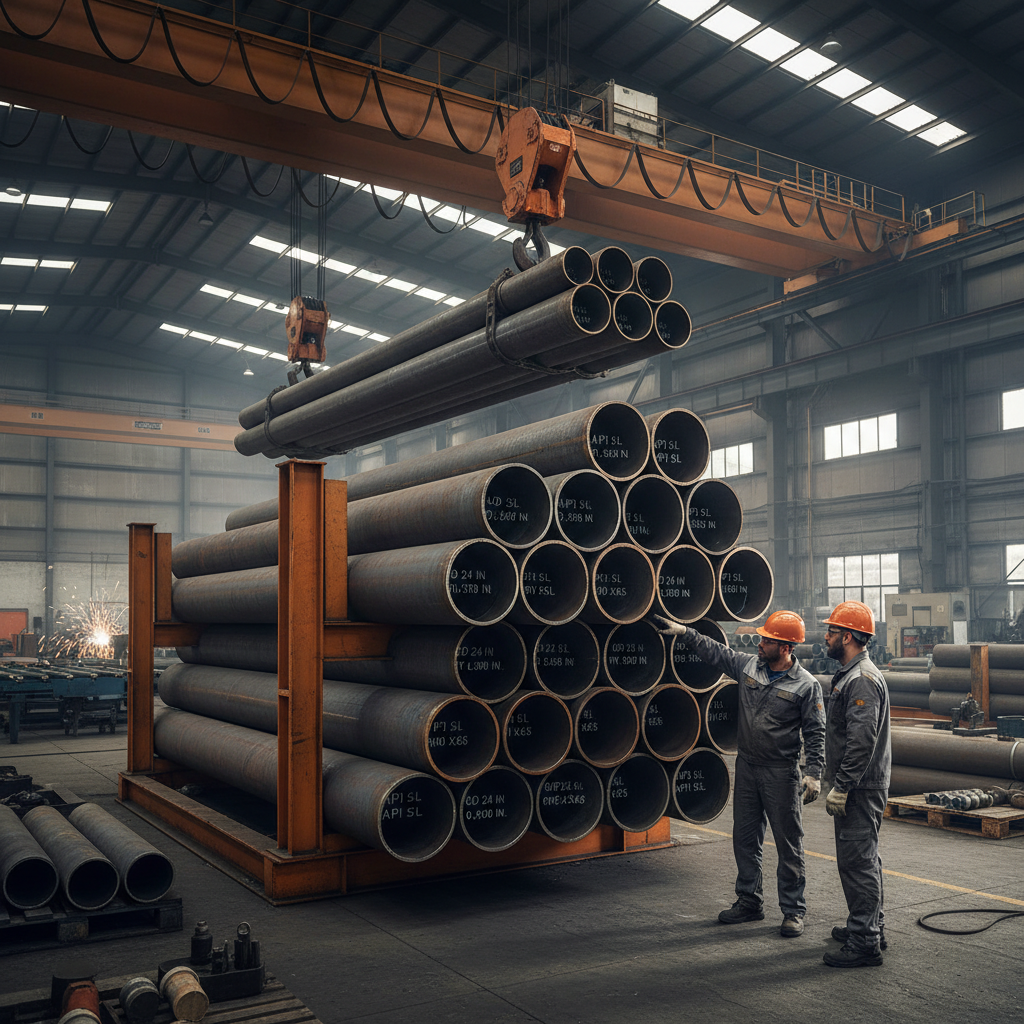
The global energy landscape relies heavily on the precise execution of the api 5l specification to maintain the flow of resources across continents. According to industry benchmarks, thousands of kilometers of pipeline are laid annually, and the vast majority adhere to these standards to ensure interoperability between different regional suppliers and international engineering firms.
Without such a rigorous framework, the risk of leakage and structural failure would increase exponentially, leading to devastating environmental consequences and economic losses. The api 5l specification addresses these challenges by mandating strict quality control measures, from the raw steel chemistry in the furnace to the final non-destructive testing of the weld seams.
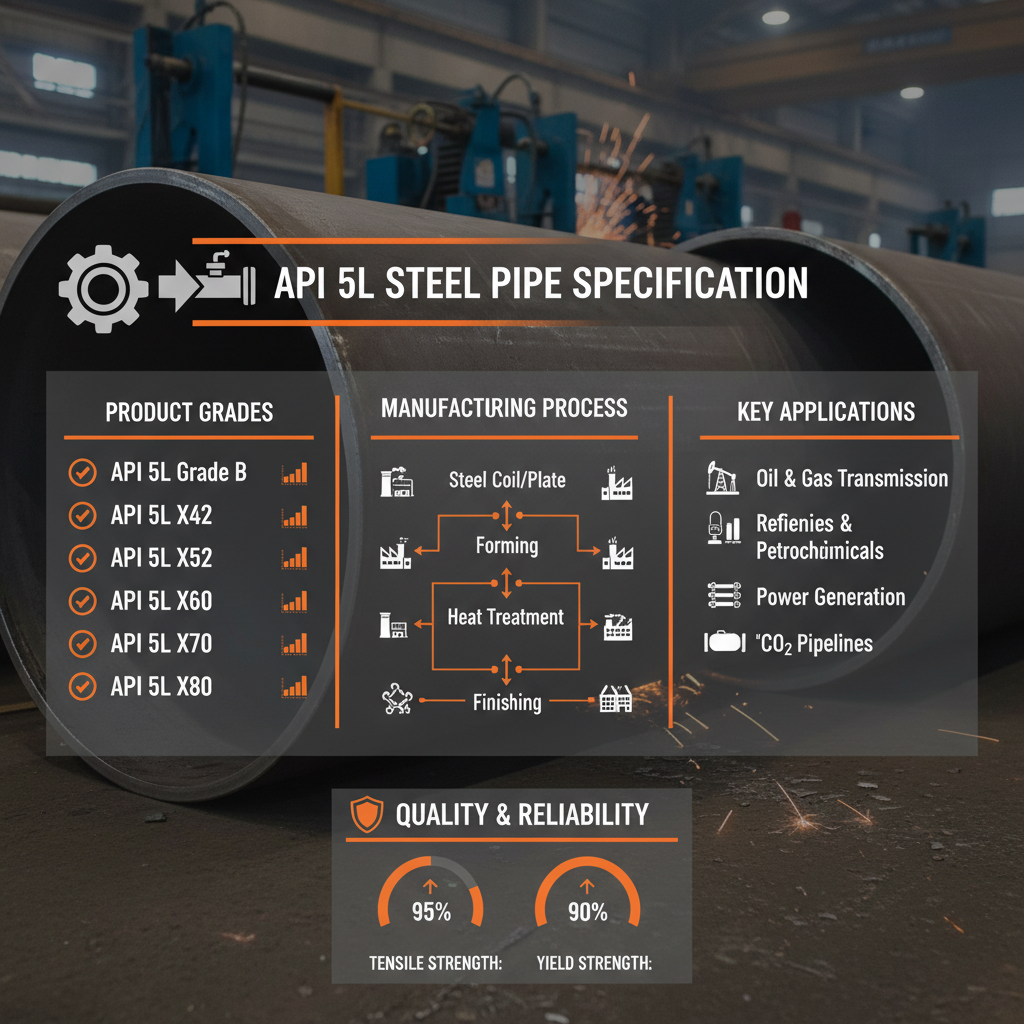
At its core, the api 5l specification is a technical document that specifies the requirements for the manufacture of line pipe for use in the conveyance of oil, gas, and water. It defines two main product specification levels: PSL 1 and PSL 2. PSL 1 is generally used for standard applications, while PSL 2 incorporates more stringent requirements for chemical composition, mechanical properties, and mandatory testing, making it the preferred choice for high-pressure or corrosive environments.
This specification does not just cover the final product but extends to the entire manufacturing process, including the rolling, welding, and heat treatment of the steel. By standardizing these variables, the api 5l specification ensures that a pipe produced in a facility in Asia will have the same structural integrity and fitting compatibility as one produced in North America.
In modern industry, this framework acts as a bridge between metallurgy and civil engineering. It translates complex material science—such as yield strength and toughness—into actionable data that project managers can use to calculate wall thickness and safety factors, ensuring that the infrastructure is neither dangerously under-engineered nor wastefully over-engineered.
Durability is the primary pillar of the api 5l specification. By controlling the carbon equivalent and alloying elements, the standard ensures that pipes can withstand internal pressure and external soil loads without succumbing to plastic deformation or brittle fracture.
Chemical composition is strictly monitored under the api 5l specification to prevent issues like hydrogen-induced cracking (HIC) and sulfide stress cracking (SSC). This is particularly critical for "sour service" pipes that transport fluids containing hydrogen sulfide, where the material must be specifically treated to resist corrosion.
Mechanical testing, including tensile and impact tests, is another non-negotiable aspect of the api 5l specification. These tests guarantee that the steel possesses the necessary ductility to be bent or formed during installation without cracking, providing essential flexibility in challenging terrains.
Selecting the right grade within the api 5l specification is a balance between strength and weldability. Higher grades, such as X70 or X80, offer superior yield strength, allowing for thinner walls and reduced material costs, but they require more precise welding procedures to avoid heat-affected zone (HAZ) degradation.
To visualize the trade-offs, engineers often compare different specification methods and grades based on their performance in various environments, such as deep-sea deployment versus overland transmission.
The practical application of the api 5l specification spans across various critical sectors. In the oil and gas industry, these pipes are the arteries of energy, transporting crude oil from remote extraction fields in the Middle East to refineries worldwide. The ability to specify PSL 2 pipes ensures that these lines can handle the high pressures required for long-distance transport.
Beyond energy, the api 5l specification is frequently adopted for municipal water transmission and industrial chemical transport. In remote industrial zones or post-disaster recovery efforts, the rapid deployment of standardized piping allows for the quick restoration of essential water and fuel services, proving that the specification's value extends beyond profit to fundamental humanitarian needs.
Investing in materials that strictly adhere to the api 5l specification provides a logical insurance policy against operational failure. From a financial perspective, while certified pipes may carry a higher initial cost, the reduction in maintenance frequency and the elimination of catastrophic leak risks result in a significantly lower total cost of ownership (TCO).
Emotionally and socially, the use of this specification fosters trust between operators, regulators, and the public. Knowing that a pipeline follows a globally recognized safety protocol provides peace of mind to communities living near industrial corridors, transforming a potential liability into a symbol of engineering reliability.
Furthermore, the standardization enables easier auditing and regulatory compliance. When a facility can prove its inventory matches the api 5l specification, it simplifies the process of securing insurance and meeting environmental safety mandates, accelerating the path to operational commencement.
The future of the api 5l specification is closely tied to the global transition toward green energy. As the world explores hydrogen as a clean fuel source, the specification is evolving to address "hydrogen embrittlement," where hydrogen molecules penetrate the steel lattice and cause premature failure. New alloys and coatings are being integrated into the standard to ensure the existing pipeline infrastructure can be repurposed for the hydrogen economy.
Digital transformation is also playing a role. The integration of "Smart Pipes" featuring embedded sensors for real-time structural health monitoring is beginning to complement the physical requirements of the api 5l specification. This move toward "Industry 4.0" allows operators to predict failures before they occur, shifting from reactive maintenance to proactive asset management.
Sustainability is the final frontier. Future iterations of the specification are likely to include requirements for the carbon footprint of the steel production process itself. By promoting the use of electric arc furnaces (EAF) and recycled scrap, the api 5l specification will not only ensure the safety of the transport but also the sustainability of the manufacturing process.
| Steel Grade | Yield Strength (MPa) | Weldability Index | Typical Application |
|---|---|---|---|
| Grade B | 245 | High (10/10) | Low pressure water lines |
| X42 | 290 | High (9/10) | Regional gas distribution |
| X52 | 360 | Medium (8/10) | Standard oil transmission |
| X60 | 415 | Medium (7/10) | High-pressure gas mains |
| X65 | 450 | Moderate (6/10) | Offshore pipeline systems |
| X70 | 485 | Low (5/10) | Ultra-high pressure mains |
PSL 1 (Product Specification Level 1) is designed for standard service and has basic requirements for chemical and mechanical properties. PSL 2 is more stringent, requiring mandatory toughness testing (Charpy V-notch), tighter chemical limits, and more rigorous welding quality controls, making it suitable for high-risk or extreme environments.
For sour service, the specification mandates specific controls on the steel's microstructure and chemical composition to prevent Sulfide Stress Cracking (SSC). This includes limiting the hardness of the steel and implementing specific heat treatments to ensure the material can withstand the corrosive effects of hydrogen sulfide.
While standard API 5L pipes are used for natural gas, pure hydrogen can cause embrittlement in certain high-strength grades. You must consult the latest updates to the specification or use specialized grades with lower strength and higher ductility to ensure the pipe does not become brittle and crack under hydrogen exposure.
Common tests include Hydrostatic Testing to ensure leak-proof seams, Non-Destructive Testing (NDT) such as ultrasonic or X-ray inspection for weld integrity, and mechanical tests like the tensile test and impact test to verify the material's strength and toughness.
Check for the Mill Test Certificate (MTC) which provides the chemical and mechanical data for the specific heat of steel. Additionally, verify the manufacturer's API monogram license, which indicates they have been audited and approved by the American Petroleum Institute to produce these standards.
Yes, the API 5L specification applies to both seamless (SMLS) and welded (WELD) pipes. Depending on the application, seamless pipes are often chosen for higher pressure due to the absence of a weld seam, while welded pipes are more cost-effective for larger diameters.
The api 5l specification is far more than a set of technical parameters; it is the foundational pillar of safety and efficiency for the global energy and water infrastructure. From the precision of its chemical mandates to the rigor of its mechanical testing, the specification ensures that the pipes transporting our most critical resources are resilient, compatible, and sustainable. By bridging the gap between high-end metallurgy and practical engineering, it allows for the safe expansion of industrial networks across the most challenging environments on earth.
As we move toward a future defined by energy transition and digital oversight, the continued evolution of these standards will be vital. For companies looking to invest in long-term infrastructure, prioritizing strict adherence to these specifications is the only way to mitigate risk and ensure operational longevity. We encourage engineers and procurement specialists to stay updated with the latest API revisions to leverage the full potential of modern steel technology. Visit our website for more professional insights: www.benkoometal.com
If you are interested in our products, you can choose to leave your information here, and we will be in touch with you shortly.